How To Cut A Butternut Squash

This post may contain affiliate links. Please read our disclosure policy.

Cutting a whole butternut squash can feel a little intimidating, but with the right technique, it’s actually pretty simple!
Its tough skin and unusual shape may make it seem tricky to prepare, but a sharp knife, a sturdy cutting board, and a few easy steps are all you need.
This step-by-step guide will show you how to safely trim, peel, and cut a butternut squash into even pieces so it’s ready for roasting, soups, pasta, salads, and all your favorite fall recipes.
Once you master how to cut a butternut squash, be sure to check out some of my favorite squash recipes like Panera Autumn Squash Soup (Copycat), Butternut Squash Mac & Cheese, Butternut Squash Bites, Butternut Squash Chili, Butternut Squash Couscous Fritters, Roasted Brussels Sprouts and Butternut Squash, or Vegan One Pot Butternut Squash Soup.


 Table Talk with Tawnie

Butternut squash is one of those veggies that can feel a little intimidating to peel and cut, but once you know the right way to tackle it, it’s actually pretty simple! And with fall upon us and so many cozy recipes calling for butternut squash—ahem, might I suggest my Butternut Squash Mac and Cheese or my viral Panera Copycat Autumn Squash Soup?! 🤗 I figured a step-by-step tutorial was in order. I hope this guide makes your fall cooking a little easier, and be sure to send it to a friend who could use the help, too!
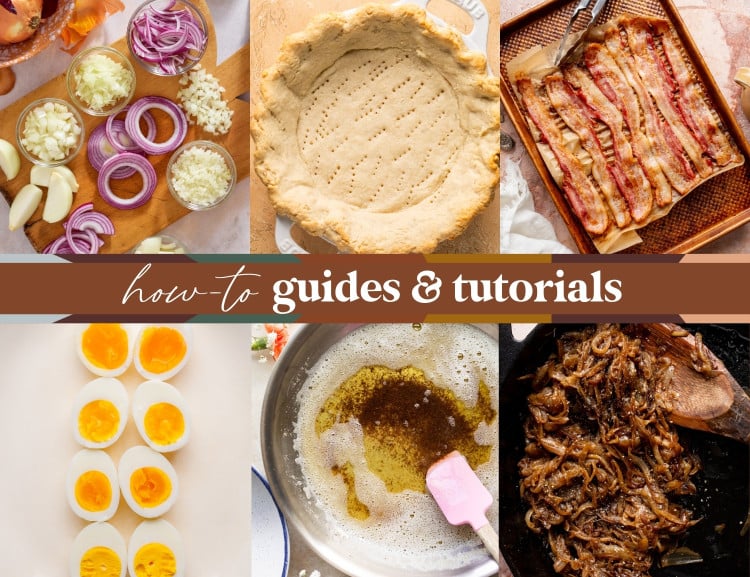
How-To Guides & Tutorials
Master essential kitchen skills with these helpful how-to guides featuring step-by-step posts for everyday cooking basics like boiling eggs, cutting onions, caramelizing onions, and more. Perfect for beginner cooks or anyone looking to build confidence in the kitchen.

How to Pick a Butternut Squash
- Look for a beige, matte skin: A mature butternut squash should have a fairly uniform tan or beige color. Avoid squash with lots of green patches, which can indicate that it was picked too early.
- Choose one that feels heavy for its size: A heavier squash generally has more moisture and flesh inside.
- Look for a firm squash: The skin should be hard and firm with no soft or squishy spots.
- Check for deep scratches or bruises: A few superficial marks are totally fine, but avoid squash with deep cuts, large bruises, or signs of mold.
- Pick one with a longer neck: If you’re buying squash specifically to cube or peel, a squash with a long, thick neck will give you more usable flesh since the neck is solid and doesn’t contain seeds.
- Skip very shiny squash: A dull, matte exterior is generally a better sign of a mature squash.

Step by Step Directions
(For the full recipe, scroll down to the recipe card below)

Separate and peel

Cut and scoop
Cut the bulb in half and scoop out the seeds.

Slice the squash
Then slice the peeled neck and seeded bottom halves into slices.

Cut into cubes
Cut the slices into strips, then cut crosswise into cubes. Use in your favorite recipes and ENJOY!!
Expert Tips
- Use a sharp knife: A dull knife is more likely to slip when cutting through firm squash.
- Create flat surfaces first: Trimming the ends and separating the neck from the bulb makes the squash much more stable while cutting.
- Peel more than just the shiny outer skin: Butternut squash has a thin pale layer underneath the skin that can be tough after cooking, so continue peeling until you reach the bright orange flesh.
- Keep the cubes similar in size: Uniform pieces roast and cook much more evenly.
- If your squash is especially hard to cut: Microwave the whole squash for about 2–3 minutes first to very slightly soften the skin. Let it cool enough to handle before cutting.
- Save the seeds! You can clean and roast the seeds just like pumpkin seeds for a crunchy snack.
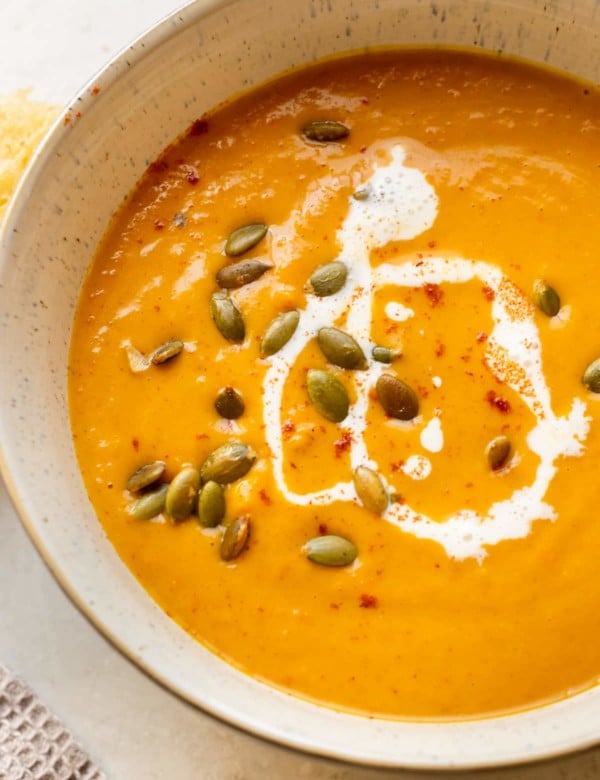
Some of My Favorite Squash Recipes



Storage / Freezing
- Cut butternut squash: Once peeled and cut, transfer the squash to an airtight container and refrigerate for up to 4–5 days.
- Freezing: Cut butternut squash can also be frozen. Spread the pieces in a single layer on a parchment-lined baking sheet and freeze until solid, then transfer to a freezer-safe bag or container. For the best texture, use frozen squash in cooked dishes like soups, stews, casseroles, and roasted vegetable recipes.

FAQs
You don’t have to peel butternut squash before cutting it, but peeling it first makes it easier to cut into cubes or other shapes. If you’re roasting large wedges or halves, you can also leave the skin on and remove it after cooking.
Butternut squash has a very dense, firm texture, which is what makes it tricky to cut. Using a sharp knife, trimming the ends, and cutting the squash into smaller sections first makes the process much easier and safer.
Yes, the skin is edible and softens as it cooks. However, many recipes call for peeled butternut squash because the skin can be somewhat tough, especially on larger or older squash.
shop this post
 Buy Now →
  Buy Now →
Before You Begin! If you make this, please leave a review and rating letting us know how you liked this recipe! This helps our business thrive & continue providing free recipes.

How To Cut A Butternut Squash
Ingredients
- 1 butternut squash

Last step! If you make this, please leave a review and rating letting us know how you liked this recipe! This helps our business thrive & continue providing free recipes.
Instructions
- Trim the ends: Place the butternut squash on a sturdy cutting board. Using a sharp chef’s knife, carefully cut about 1/2 inch off the top and bottom ends to create two flat surfaces.1 butternut squash
- Separate the neck from the rounded base: Butternut squash has two sections: one is the top section on the stem-end side, which is narrower and filled with solid flesh. The second section is more rounded and bulbous; it is hollow and contains the seeds. So you’ll lay the squash on its side and cut crosswise where the long neck meets the rounded, bulbous base to make 2 sections, because working with 2 smaller pieces makes the squash much easier and safer to handle.

- Peel the squash: Stand each piece upright on a flat cut side. Use a sturdy vegetable peeler to remove the skin, working from top to bottom. Go over the squash a second time anywhere you still see pale green or white streaks beneath the skin. You want to expose the bright orange flesh.
- Cut the bulb in half: Stand the rounded bottom portion upright on its flat end and carefully slice it in half from top to bottom.
- Scoop out the seeds: Use a sturdy spoon to scoop out the seeds and stringy pulp from each half. Discard them or save the seeds for roasting.
- Slice the squash: Cut the peeled neck into approximately 1-inch-thick rounds. Cut the seeded bottom halves into slices approximately 1 inch thick.
- Cut into cubes: Cut the slices into strips, then cut crosswise into approximately 1-inch cubes. Try to keep the pieces relatively uniform, so they cook at the same rate.


Notes
- Use a sharp knife: A dull knife is more likely to slip when cutting through firm squash.
- Create flat surfaces first: Trimming the ends and separating the neck from the bulb makes the squash much more stable while cutting.
- Peel more than just the shiny outer skin: Butternut squash has a thin pale layer underneath the skin that can be tough after cooking, so continue peeling until you reach the bright orange flesh.
- Keep the cubes similar in size: Uniform pieces roast and cook much more evenly.
- If your squash is especially hard to cut: Microwave the whole squash for about 2–3 minutes first to very slightly soften the skin. Let it cool enough to handle before cutting.
Nutritional information is provided as a courtesy and is automatically calculated. It should only be construed as an estimate rather than a guarantee. Ingredients can vary and Kroll’s Korner can’t make any guarantees to the accuracy of this information.
📸 Photography by Lorena Masso