Overnight Cinnamon Rolls

This post may contain affiliate links. Please read our disclosure policy.
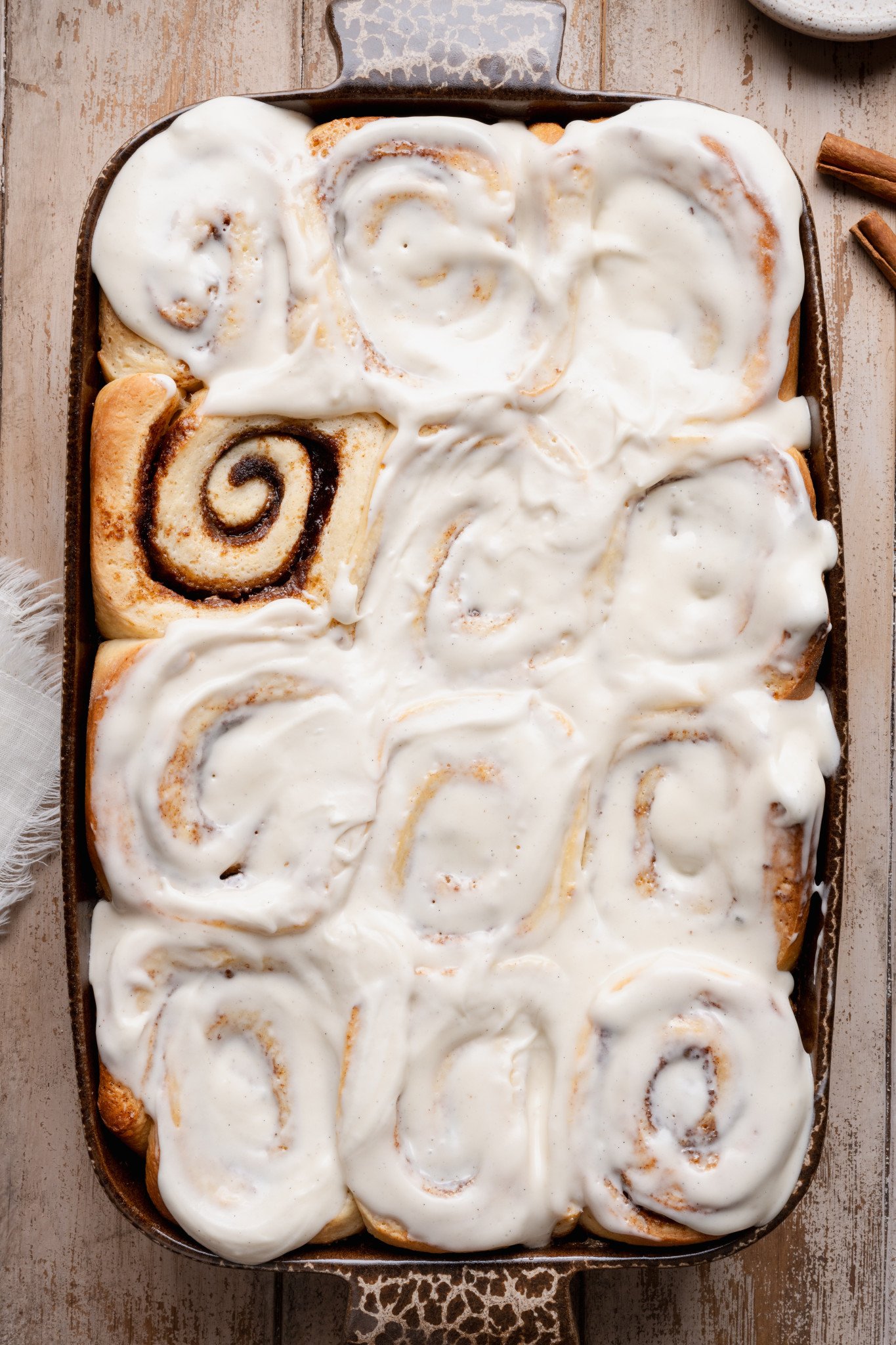
There’s something about warm cinnamon rolls in the morning that instantly makes the day feel special. Especially when you didn’t have to wake up early to make them!
These Overnight Cinnamon Rolls are my favorite way to get that bakery-style result without the morning stress. Most of the work happens the night before, so all that’s left to do is let them finish proofing, bake, and frost.
Inspired by my Sheet Pan Cinnamon Rolls, this version is smaller but just as cozy and incredibly flexible. Featuring the same delicious caramel sauce that you’ll find in my Small Batch Cinnamon Rolls, these bake up soft and fluffy and are just irresistible!
Be sure to read through the full post for all of my tips and tricks to help you become a homemade cinnamon roll expert!
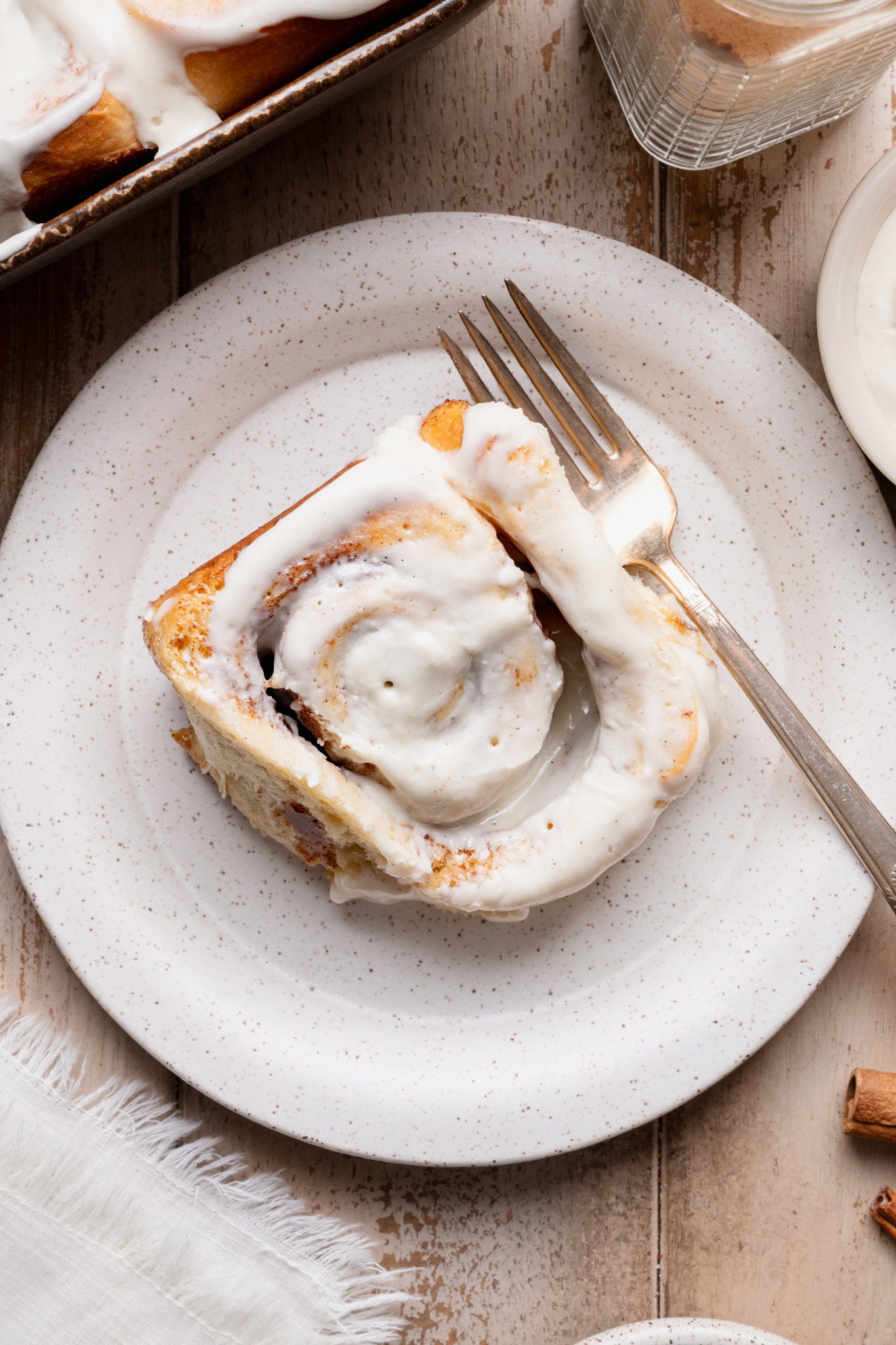
 Table Talk with Tawnie

Pretty much any time I want to make cinnamon rolls, I like to make them using the overnight option because I’m usually making them late at night once the kids are in bed. Let me give you my real life example, I always make this recipe on Christmas Eve, and then Christmas morning take them out for their final proof and bake when everyone is diving into gifts! Once the mess is cleaned up, everyone will have a yummy warm cinnamon roll ready to devour! This recipe is inspired by my Sheet Pan Cinnamon Roll recipe…so I pretty much halved that recipe and created this one and gave you the option to of course bake them using an overnight method OR you can bake them the same day! I hope you love them as much as my family does!
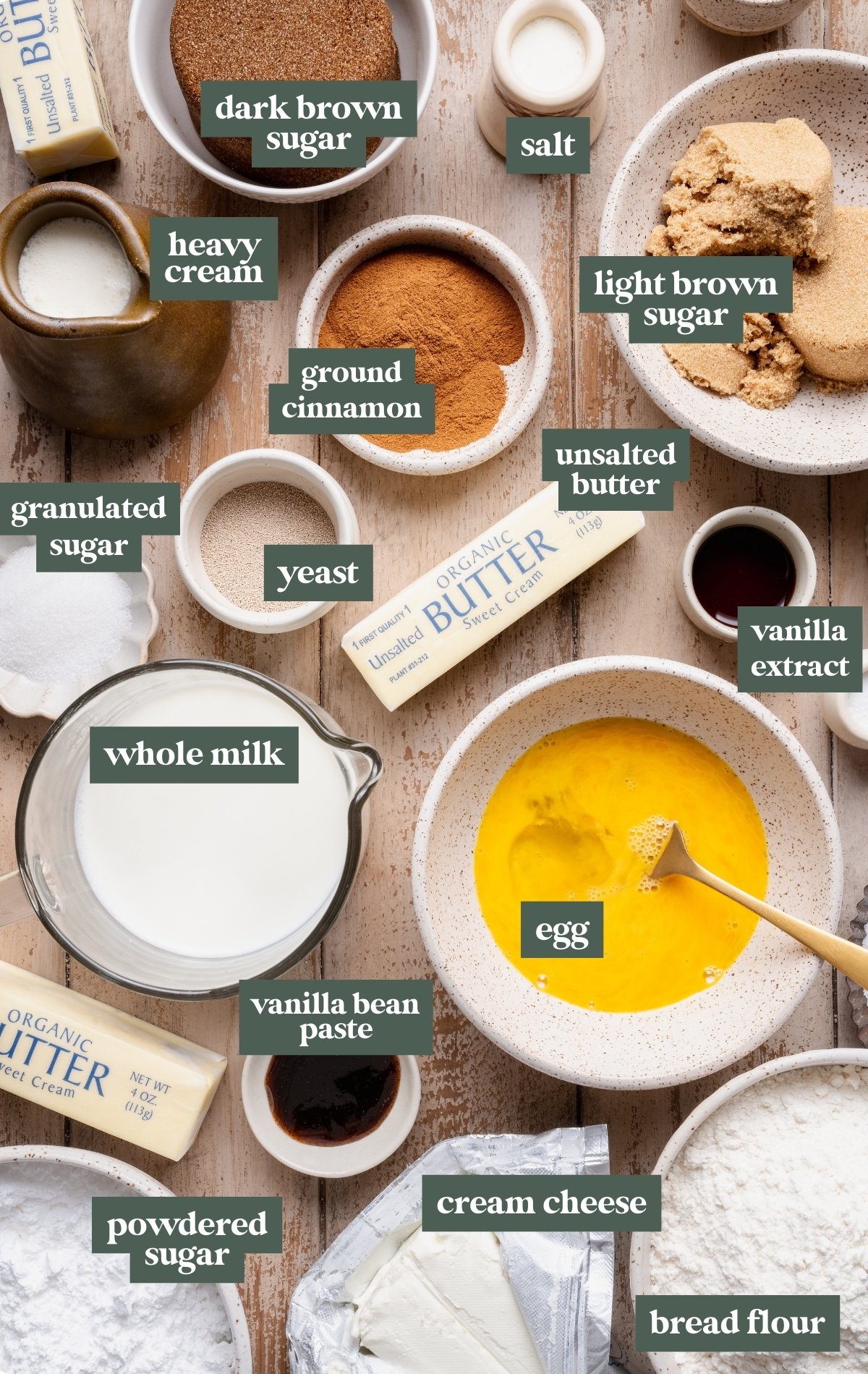
- Whole Milk (warmed): To activate the yeast and add richness to the dough. Warm milk helps create soft, tender cinnamon rolls with a better rise and fuller flavor.
- Active Dry Yeast: What gives these cinnamon rolls their fluffy, bakery-style texture. Blooming it first ensures it’s active before building the dough, which helps ensure a reliable rise.
- Bread Flour: Adds structure and chew and helps the rolls bake up tall, soft, and pillowy.
- Unsalted Butter: Butter is used throughout the dough, filling, caramel base, and frosting to add richness and moisture. Using unsalted butter lets you control the salt level and overall flavor.
- Dark Brown Sugar: Brings deep, caramel-like flavor to the filling. Its higher molasses content keeps the rolls moist and gives that classic gooey center.
- Ground Cinnamon: The star of the show! Cinnamon provides bold, cozy flavor and a defined swirl that stays pronounced even after baking and frosting.
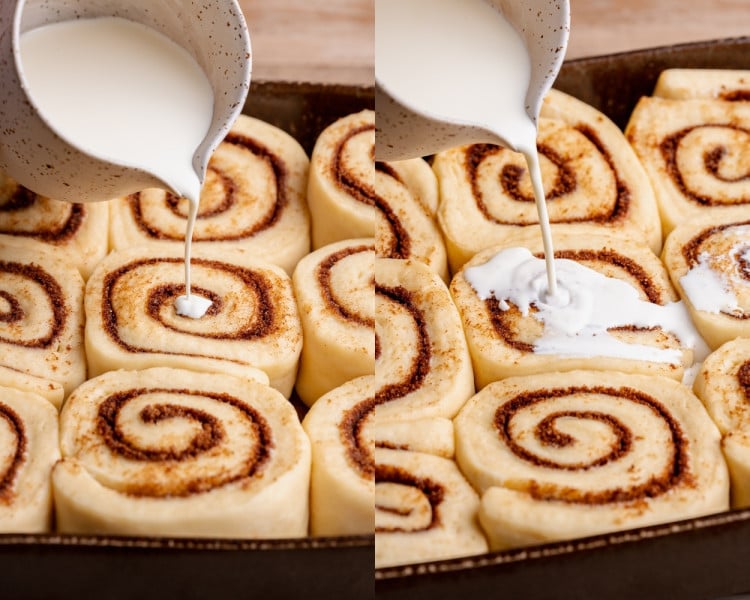
- Heavy Cream: Pouring warm heavy cream over the rolls before baking is the secret to extra gooey cinnamon rolls. It soaks into the dough as it bakes, creating soft centers and rich texture.
- Vanilla Bean Paste: Adds deep vanilla flavor with subtle specks throughout the frosting, enhancing the overall warmth and sweetness of the rolls.
- Full-Fat Cream Cheese: Makes the frosting thick, tangy, and luxurious. It balances the sweetness and melts beautifully over the warm cinnamon rolls.
- Other Ingredients Needed: granulated sugar, eggs, kosher salt or fine sea salt, light brown sugar, powdered sugar, vanilla extract
Instant Yeast vs. Active Dry Yeast
This recipe as written uses active dry yeast, but instant yeast (or rapid rise, fast acting, quick rising) can be used interchangeably. It’s a 1:1 ratio. The active dry yeast rise time is just slightly longer compared to the instant yeast. See recipe notes below on how to make this recipe with instant yeast.
Step by Step Directions
(For the full recipe, scroll down to the recipe card below)
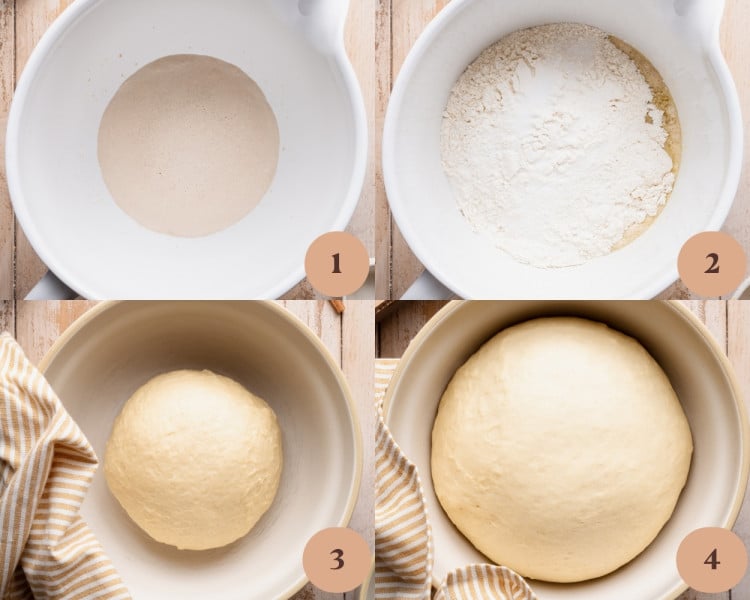
Make & Rise the Dough
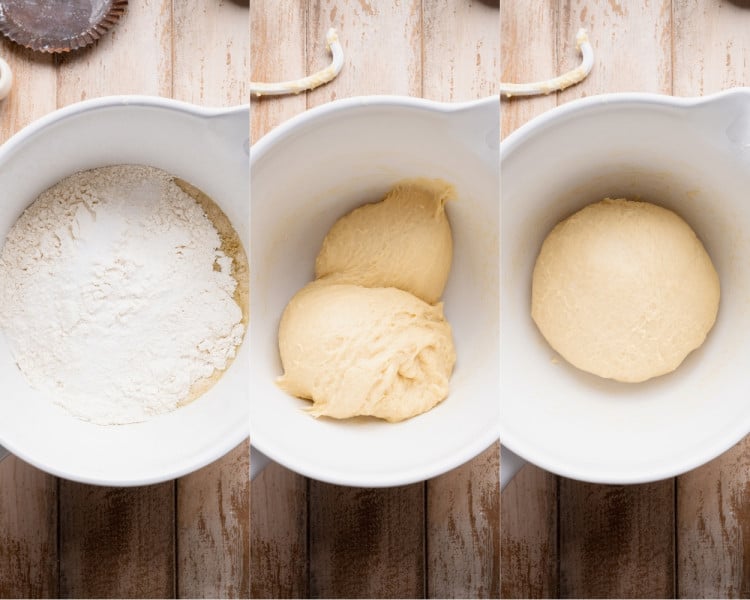
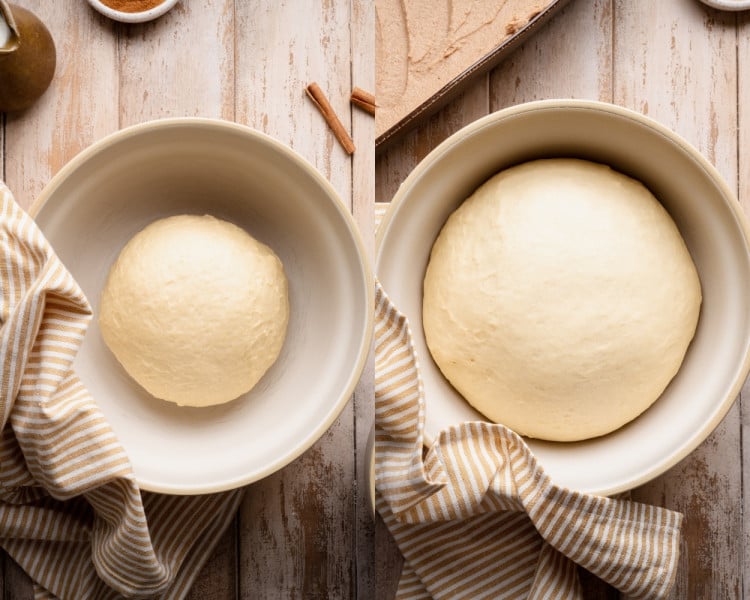
Bloom the yeast in warm milk and sugar until foamy. Mix in the remaining dough ingredients and knead until soft, smooth, and slightly tacky. Cover and let the dough rise until doubled in size.
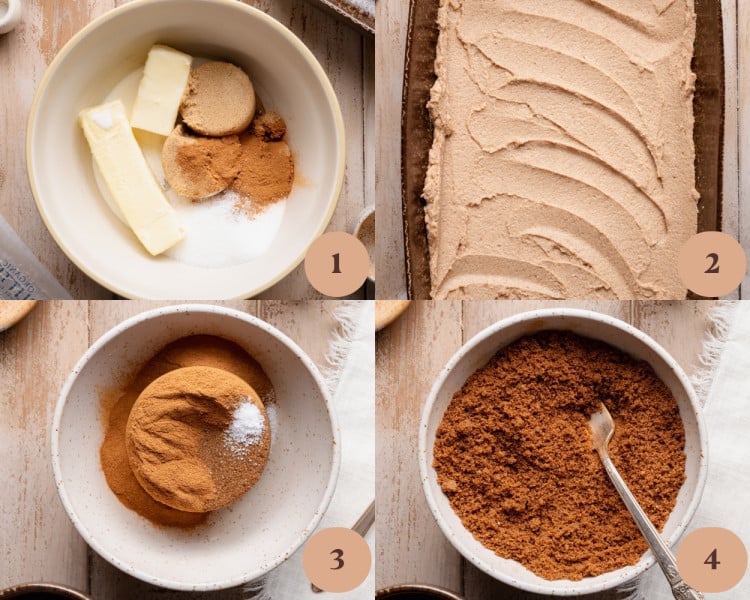
Prep the Pan & Filling
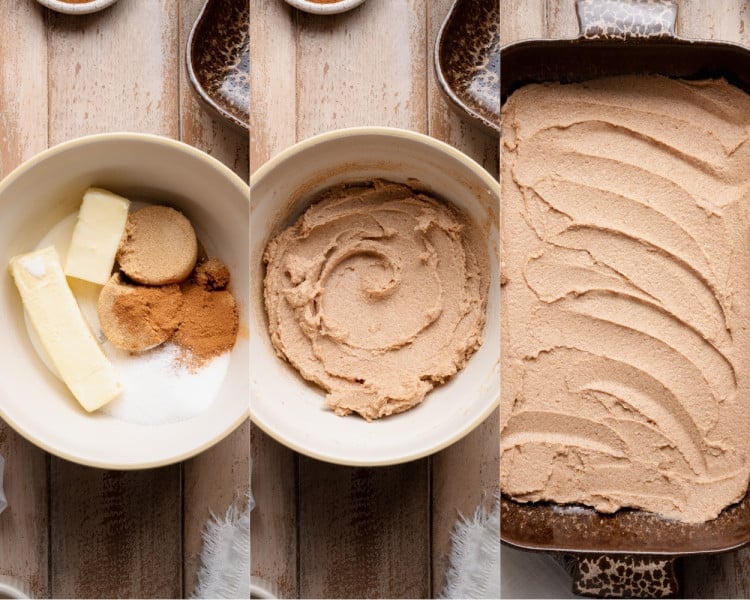
While the dough rises, mix the cinnamon sugar filling and the caramel sauce (if using). Spread the caramel evenly into the bottom of a greased baking dish and set aside.
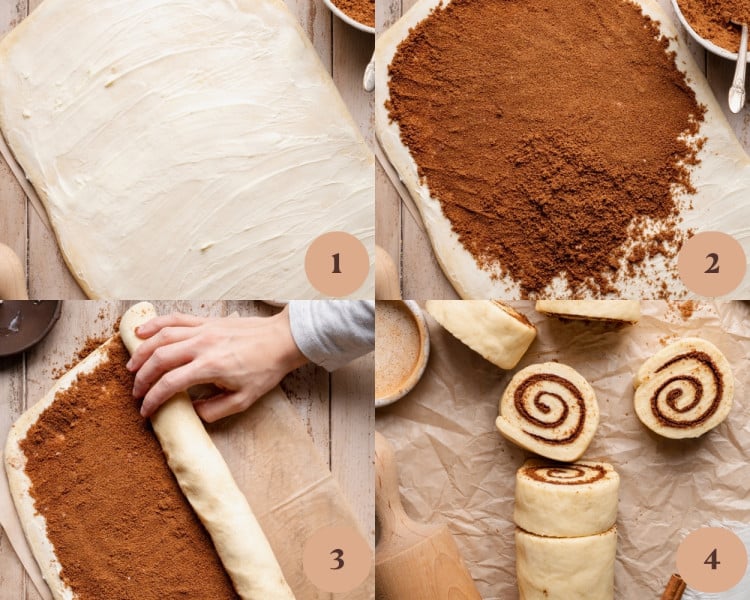
Roll, Fill, & Shape
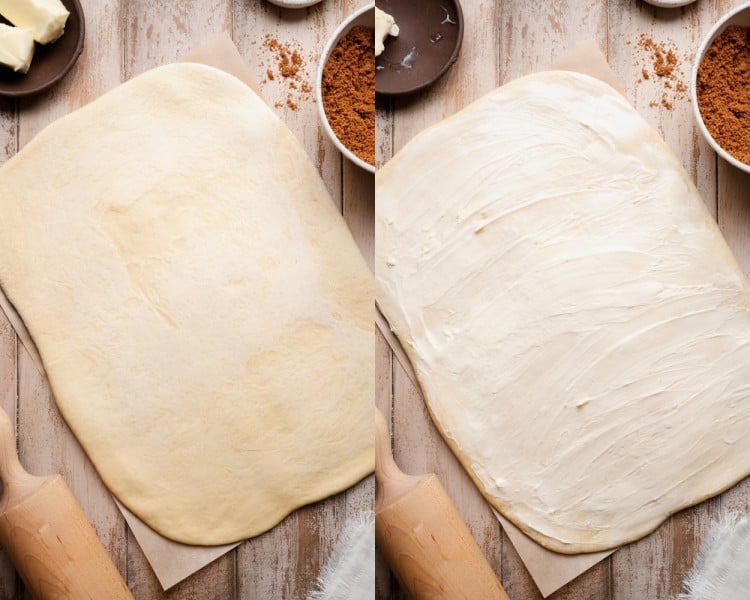
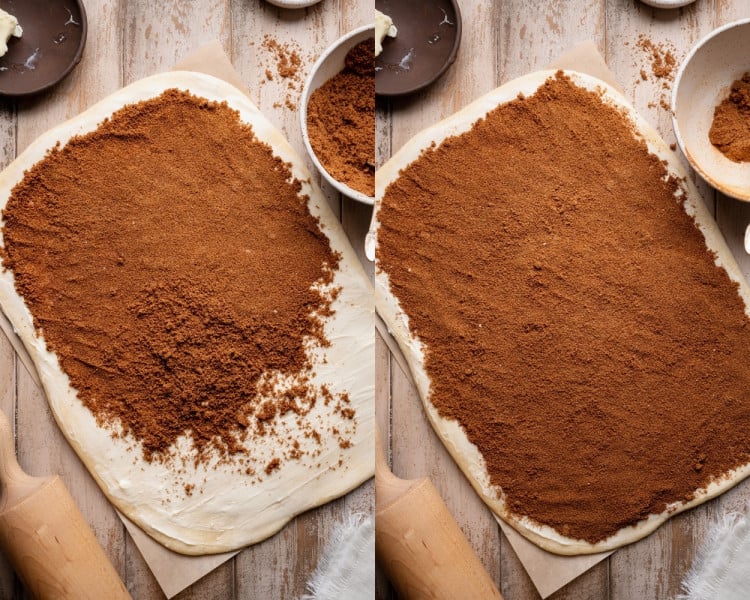
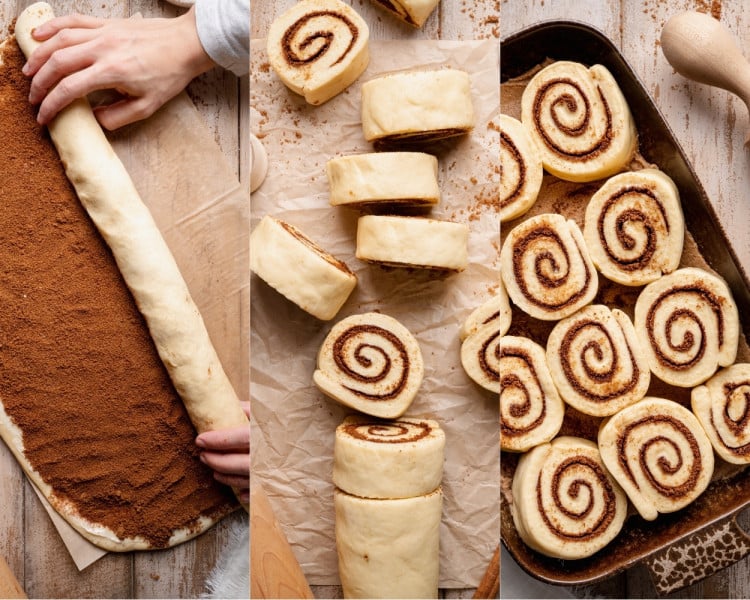
Roll the dough into a large rectangle. Spread with softened butter, sprinkle evenly with cinnamon sugar, then roll tightly into a log. Slice into rolls and arrange them in the prepared pan.
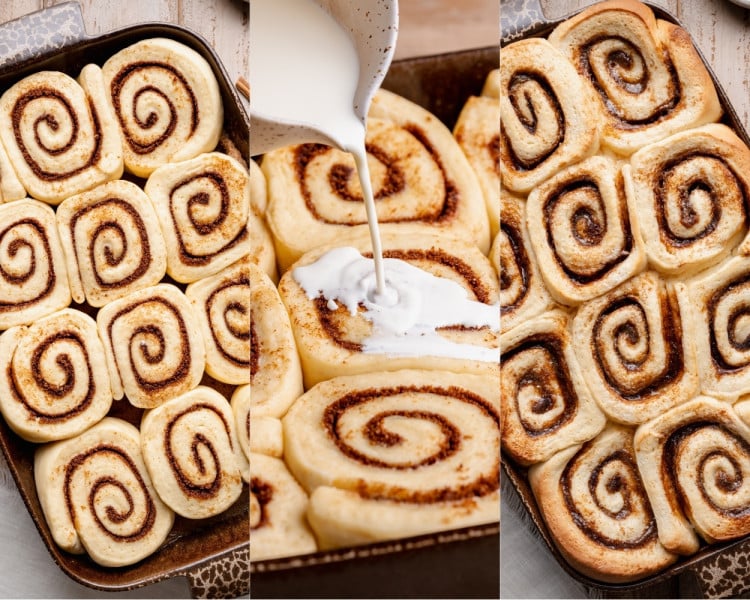
Rest, Cream, & Bake
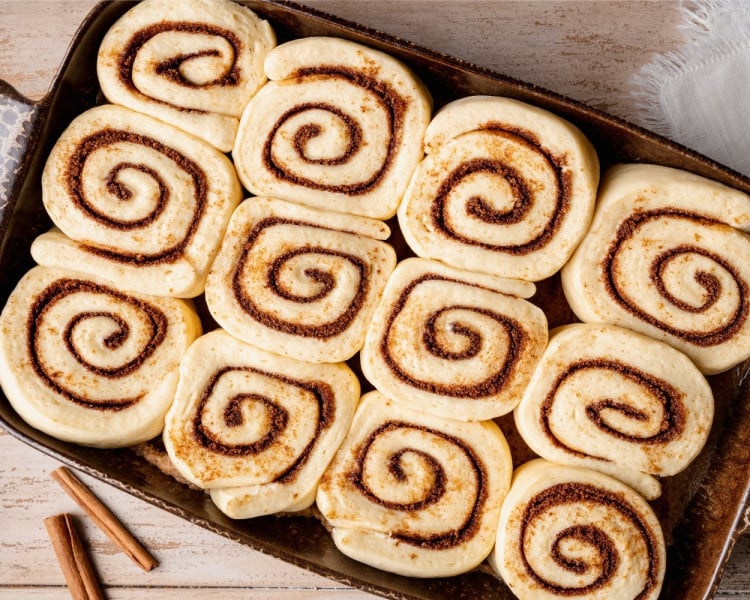
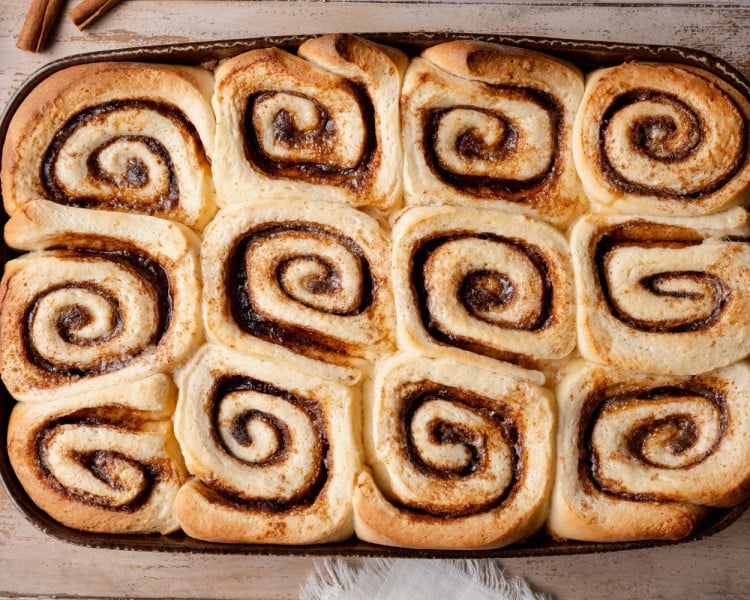
Cover and refrigerate overnight or let the rolls rise the same day until puffy. Just before baking, pour warmed heavy cream over the rolls. Bake until golden and fluffy.
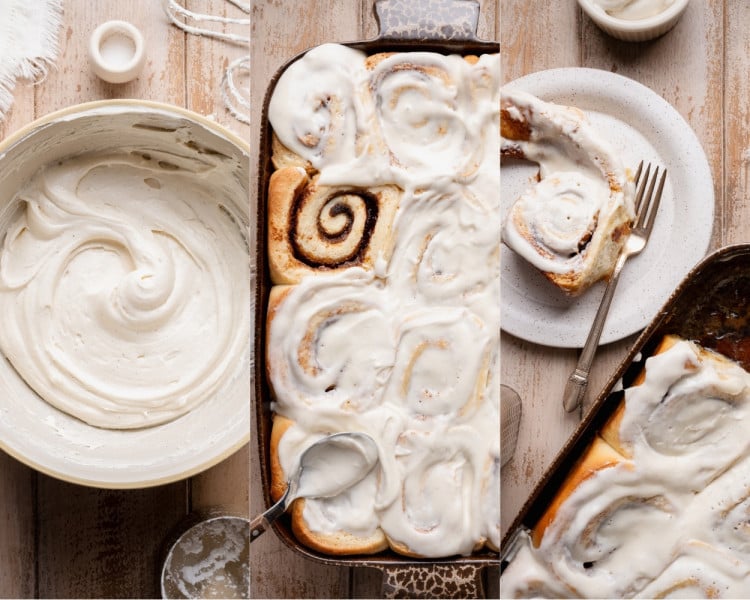
Frost & Serve
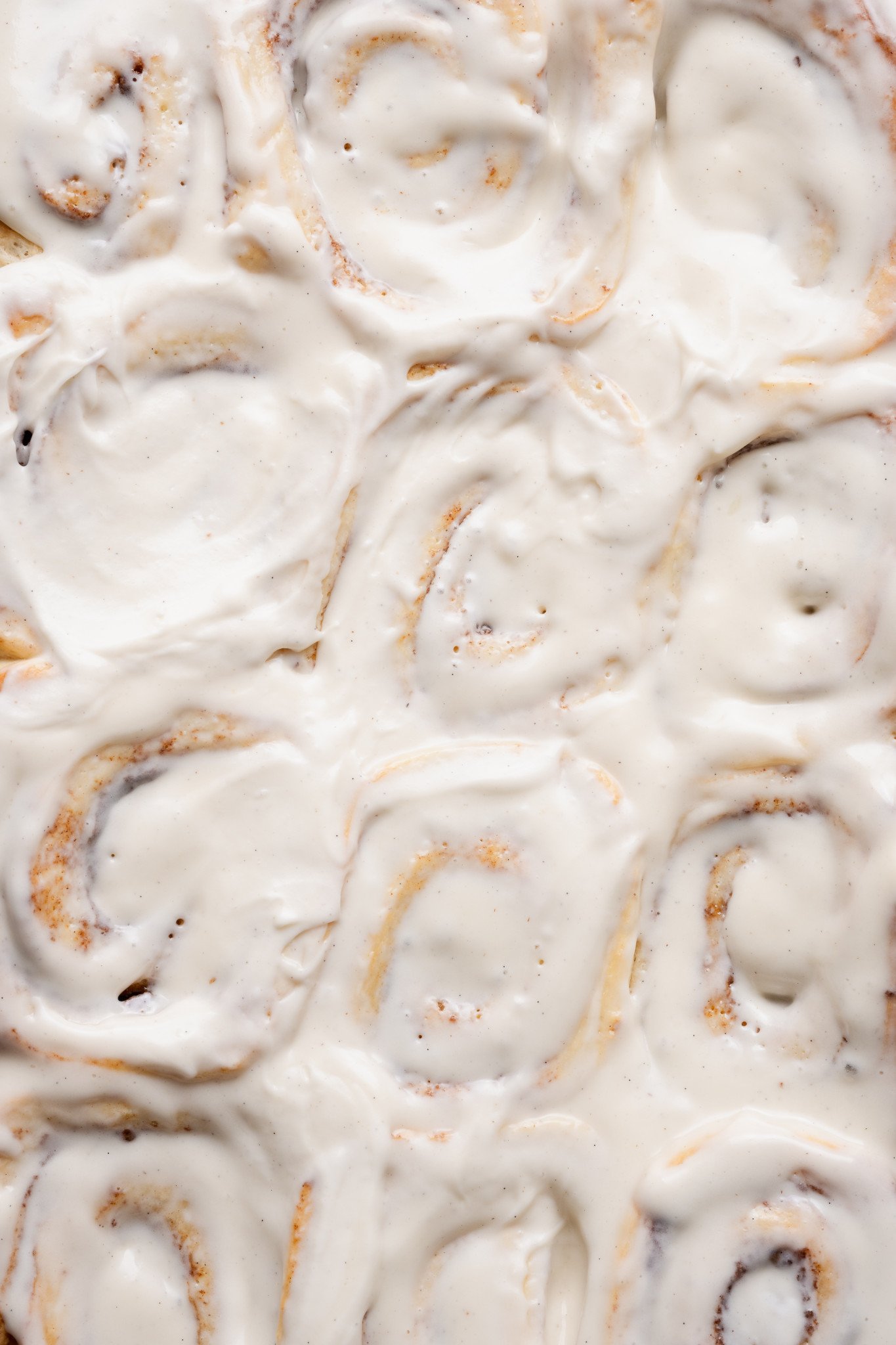
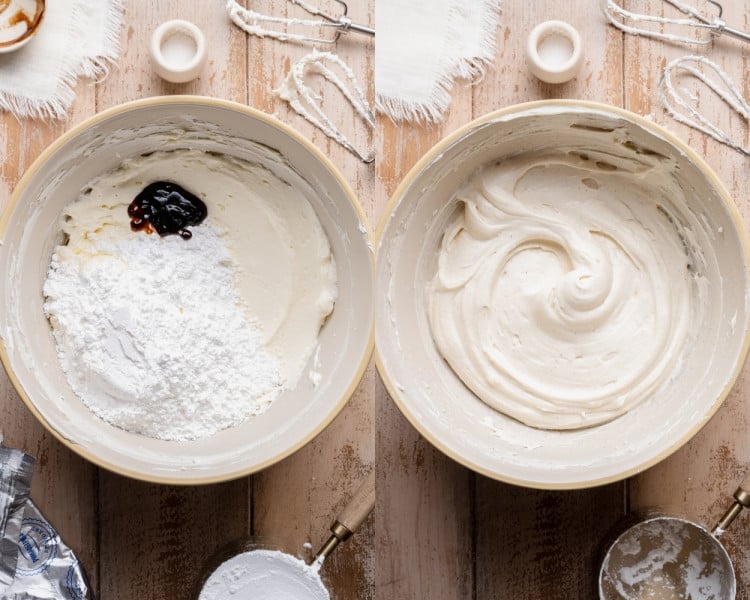
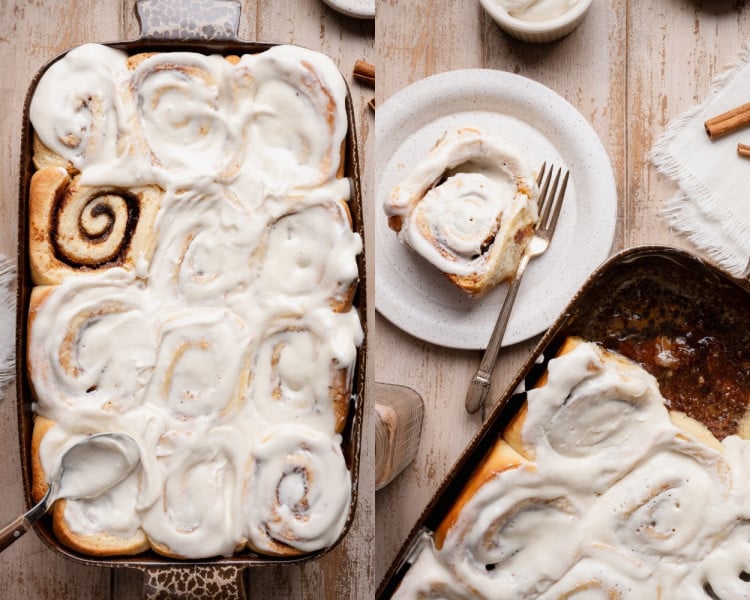
Whip up the cream cheese frosting while the rolls bake. Spread generously over the warm rolls so it melts into every swirl. Serve immediately and enjoy.
Expert Tips
- Heat the milk to the proper temp: The sweet spot for warming milk is about 110°F. If the milk is too hot (120°F or higher), it can kill the yeast and prevent the dough from rising. Active dry yeast is alive but dormant due to the lack of moisture, so when it’s mixed with warm milk, the yeast cells become active. This process is commonly known as activating or blooming the yeast.
- Room-temperature eggs: Room-temperature eggs blend more easily into the dough and help maintain a warm environment for the yeast. Cold eggs can slow yeast activity and tighten the dough, while room-temperature eggs promote a smoother dough and better rise.
- Don’t use too much flour: The dough should feel soft and slightly tacky, not dry. Adding too much flour can make the rolls dense instead of light and fluffy. Add flour slowly and stop as soon as the dough pulls away from the bowl.
- Use the counter for final kneading: Knead the dough on the counter for the last minute or so of the kneading process. Sometimes mixing bowls miss small dry patches or streaks of flour along the sides, which means parts of the dough never fully hydrate or develop gluten. By turning the dough out onto the counter and giving it a quick hand-knead, you ensure every bit of dough is smooth, cohesive, and perfectly kneaded and help to strengthen the gluten further.
- Prepping the bowl for the 1st rise: Lightly grease a large bowl, then place the dough in the bowl. Then, spray the plastic wrap you’re using to cover the dough with oil or baking spray to prevent the dough from sticking as it rises.
- Where to rise the dough: Don’t stress about this too much. Dough does rise best in a warm, draft-free environment, but if your kitchen runs a little cool, the rise may just take a bit longer. I usually place my bowl right on the kitchen counter, and it typically rises within 1½ – 2 hours for the first rise. If your oven has a proof setting, that’s a great option too — it provides a gentle, consistent warmth that helps the dough rise evenly.
- Go by look, not the clock: Rise times can vary based on room temperature, yeast type, and dough hydration. The dough is ready when it has doubled in size and gently springs back when pressed, not just because a certain amount of time has passed.
- Flour your surface: Be sure to lightly flour your clean work surface, rolling pin, hands, and the dough to prevent anything from sticking.
- Roll dough evenly: Try to roll the dough into an even rectangle with consistent thickness. This helps the rolls bake evenly so you don’t end up with doughy centers or dry outer rolls.
- Tent with foil (if needed): If the tops of the rolls are browning too quickly in the oven, loosely tent them with foil during the last part of baking. This keeps them soft and prevents over-browning.
- Frost while warm, not hot: Let the rolls cool for about 10 minutes before frosting. This allows the frosting to gently melt into the rolls without completely sliding off.
Variations / Substitutions
- Filling Flavors: Try a fun, seasonal twist instead of the classic cinnamon filling! Try pumpkin spice, apple pie spice, or even espresso powder for a cozy coffee version.
- Add-ins: Mix in chopped pecans, walnuts, mini chocolate chips, or toasted coconut flakes with the brown sugar filling for extra texture and flavor.
- Frosting: You can use vanilla bean paste for the most flavor, but regular vanilla extract or even a touch of maple extract are also delicious. Or, you can swap in brown butter for the ultimate nutty flavor boost. (My Pumpkin Cinnamon Rolls recipe has instructions on a delicious brown butter frosting!)
- Mini Cinny Rolls: Instead of 12 rolls, roll the dough out a little thinner and cut into 20-24 small rolls. Bake for a slightly shorter time, approximately 15–18 minutes.
- Citrus Twist: Add a teaspoon of orange zest to the dough or frosting for a bright, fresh flavor that pairs beautifully with cinnamon.
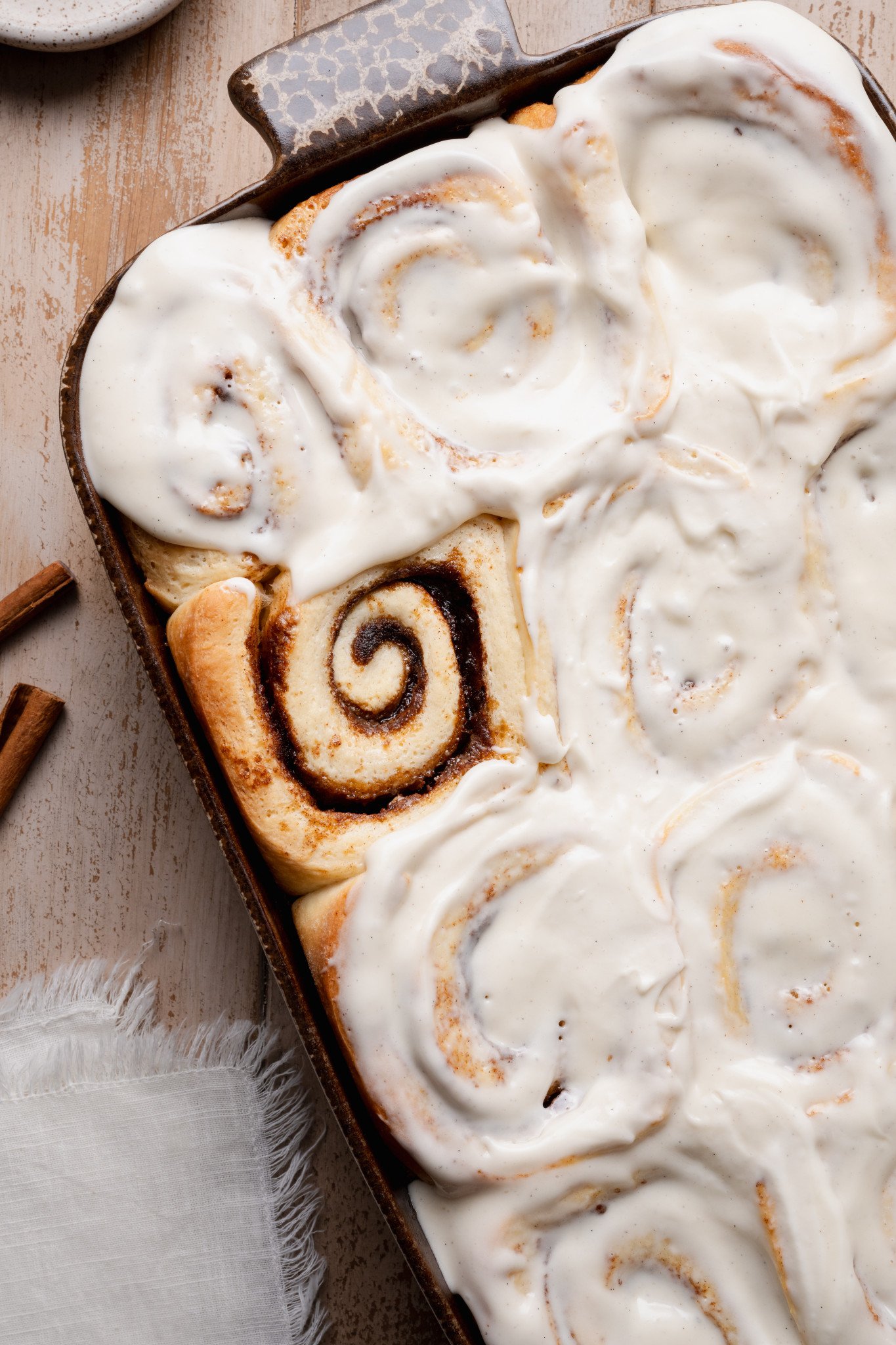
Storage / Freezing
- Room temperature: Store frosted or unfrosted cinnamon rolls in an airtight container at room temperature for up to 2 days. Re-warm in the microwave until soft and gooey again, ~15-45 seconds. (The cream cheese frosting has sugar, which acts as a preservative and prevents the frosting from spoiling as quickly, which is why it can be kept at room temperature.)
- Refrigerator: Store the frosted or unfrosted rolls tightly covered or in an airtight container in the fridge for up to 5 days. Re-warm in the microwave.
- Freezer: To freeze the baked cinnamon rolls, allow them to cool completely, tightly cover, and then freeze for up to 3 months. Thaw overnight in the fridge, then rewarm and enjoy.
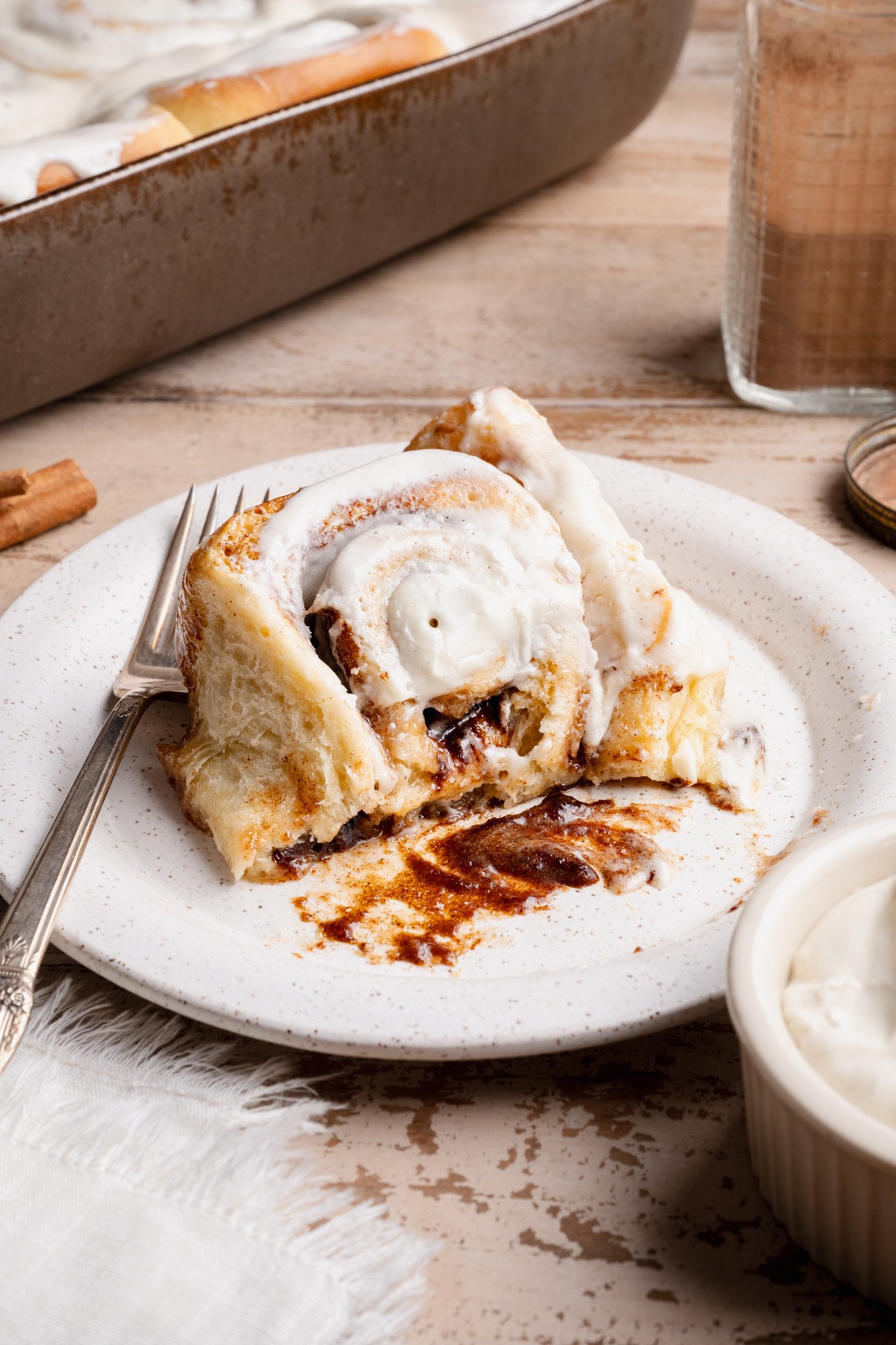
FAQs
Can I use all-purpose flour instead of bread flour?
Yes! Ultimately, it comes down to personal preference and what texture you prefer in your cinnamon rolls. Both types of flour can yield delicious results, so you can experiment with each to see which you like best.
Can I use instant yeast instead of active dry yeast?
Yes, you will skip the blooming until foamy and activated in Step 1. Instead, mix the instant yeast with the flour, sugar, and salt before adding that to the stand mixer with the warm whole milk, eggs, and melted butter.
Why did the centers of my cinnamon rolls pop out?
This could be for a few reasons: 1. If the dough is rolled too tightly, the centers can become compressed and pop out as the rolls expand and bake. 2. If the dough is not rolled out evenly, some parts may be thicker or thinner, causing uneven baking and resulting in the centers popping out. 3. If the rolls haven’t risen enough during the second rise, they might expand too quickly in the oven, pushing the centers out. Sometimes you can just press the middle back down and no one will even know!
Why isn’t my dough rising?
If your dough isn’t rising, it’s usually due to one of a few common reasons. 1) Check your yeast. Expired or old yeast won’t activate properly. 2) Pay attention to the milk temperature. The milk should be around 110°F; if it’s too hot (120°F or higher), it can kill the yeast and prevent the dough from rising. 3) Consider your environment. Dough rises more slowly in a cold kitchen, so it may just need more time. I typically place my dough in a lightly oiled bowl, cover it with plastic wrap and a towel, and let it rise on the kitchen counter near a warm or sunny spot.
How can I tell when my cinnamon rolls are done baking?
Visually, the edges should be slightly pulled away from the sides of the pan and they should look golden brown. The center of the rolls should each an internal temperature of 190°F-200°F. If you notice the tops browning too quickly, tent a piece of aluminum foil over the tops.
shop this post
 Buy Now →
 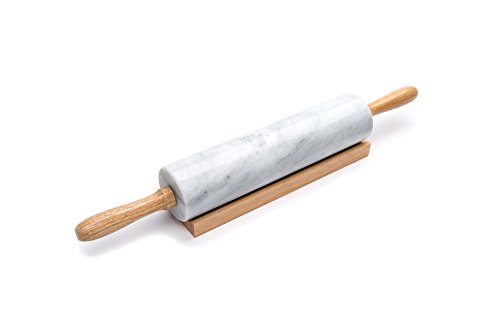 Buy Now →
 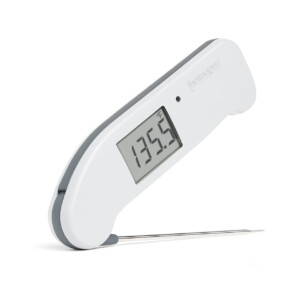 Buy Now →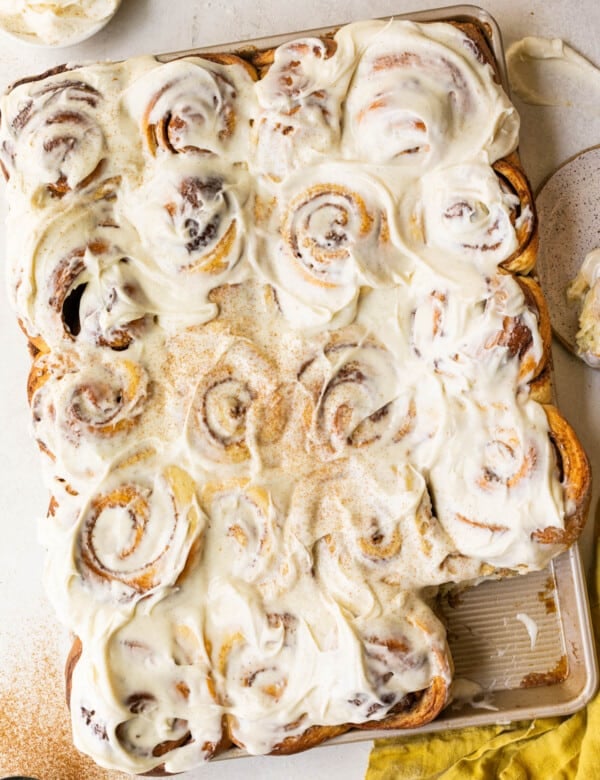
Before You Begin! If you make this, please leave a review and rating letting us know how you liked this recipe! This helps our business thrive & continue providing free recipes.
Overnight Cinnamon Rolls
Ingredients
For The Yeast Mixture
- 1 ¼ cups whole milk (warmed to 110°F)
- 1 Tbsp. active dry yeast (see notes below for how to use instant yeast)
- 1 Tbsp. granulated sugar
For The Dough
- 1/2 cup unsalted butter (melted)
- 1/2 cup granulated sugar
- 2 eggs (room temperature, whisked)
- 4 – 4 1/2 cups bread flour (or all-purpose flour, spooned and leveled, plus up to ~1/4 cup more as needed and a little more for dusting)
- 1/2 Tbsp. kosher salt (or 1 tsp. fine sea salt)
For the Caramel Sauce (optional for the bottom of the pan, like in my small batch cinnamon rolls. But I recommend it because it’s so good for gooey cinnamon rolls)
- 2/3 cup unsalted butter (very soft)
- 2/3 cup light brown sugar (packed)
- 2 tsp ground cinnamon
- 6 Tbsp granulated sugar
- 2 tsp vanilla extract
- 3 Tbsp heavy cream
- 1/4 tsp salt
For The Filling
- 1/2 cup unsalted butter (softened)
- 1 cup dark brown sugar (packed)
- 3 Tbsp. ground cinnamon
- 1/4 tsp. kosher salt
- 1/4 cup heavy cream (optional to pour over rolls to make them more gooey) (slightly warmed)
For The Frosting
- 8 oz. full-fat cream cheese (softened)
- 1/4 cup salted butter (softened)
- 2 ½ cups powdered sugar
- 1/2 Tbsp. vanilla bean paste (or vanilla extract)
- Add a pinch of salt if you used unsalted butter

Last step! If you make this, please leave a review and rating letting us know how you liked this recipe! This helps our business thrive & continue providing free recipes.
Instructions
- *Note: if making the yummy caramel sauce for the bottom of the pan, some readers have mentioned it making the rolls overly sweet. You can choose to reduce the caramel sauce, or omit it. **Note 2: don't pack the rolls in the pan too tightly. If you feel it's needed, you can divide the rolls between two, 8×8 pans.
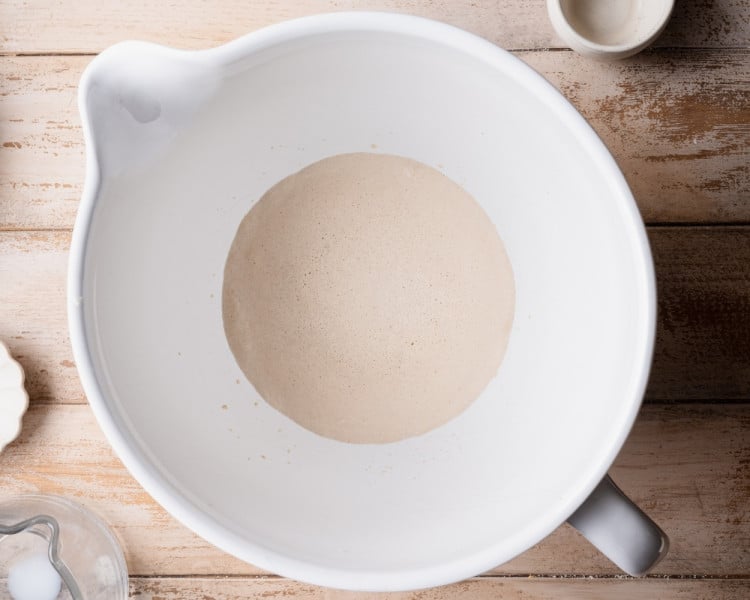
- Make the Yeast Mixture: In a large bowl or the bowl of a stand mixer, combine the warm milk (about 110°F), yeast, and granulated sugar. Gently stir and let sit for 10 minutes, until foamy and activated. (If it doesn’t foam, your yeast may be expired or the milk too hot.)1 ¼ cups whole milk, 1 Tbsp. active dry yeast, 1 Tbsp. granulated sugar

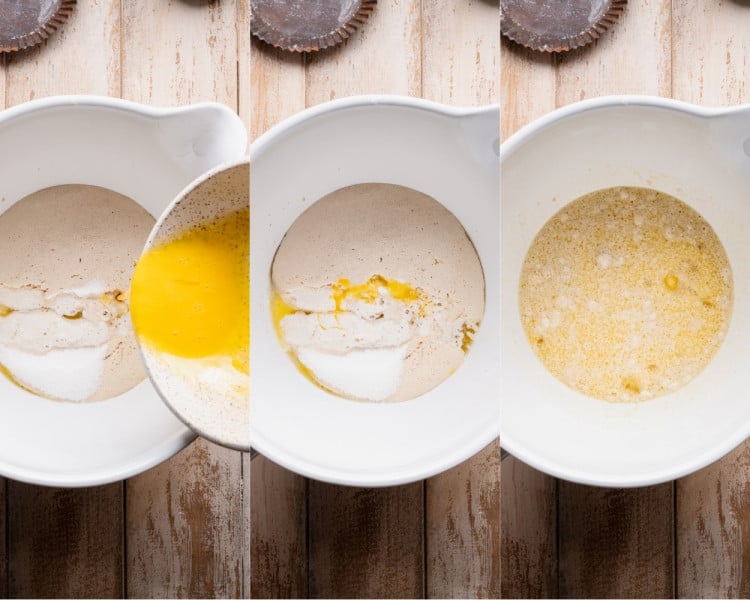
- Add the Wet Ingredients: To the activated yeast mixture, add the melted butter, granulated sugar, and whisked eggs. Mix until combined.1/2 cup unsalted butter, 1/2 cup granulated sugar, 2 eggs
- Make the Dough: Add the flour (starting with 4 cups) and salt. Using a dough hook (or a wooden spoon/spatula if mixing by hand), mix until a soft dough forms. Knead for ~10 minutes until smooth, elastic, and slightly tacky but not sticky.If the dough is very sticky, add flour 1–2 tablespoons at a time, up to about ½ cup total.Pro tip: Knead the dough on the counter for the last minute (or so) of the kneading process. Sometimes mixing bowls miss small dry patches or streaks of flour along the sides, which means parts of the dough never fully hydrate or develop gluten. By turning the dough out onto the counter and giving it a quick hand-knead, you ensure every bit of dough is smooth, cohesive, and perfectly kneaded and help to strengthen the gluten further.4 – 4 1/2 cups bread flour, 1/2 Tbsp. kosher salt
- Rise: Form the dough into a ball and place in a lightly greased bowl (I use a little vegetable oil in the bowl to grease it). Cover and let rise in a warm place for 1–1½ hours, or until doubled in size.
- Make the Caramel Sauce (Optional but Highly Recommended): While the dough rises, prepare the caramel sauce. In a medium bowl, mix together the very soft butter, brown sugar, cinnamon, granulated sugar, vanilla, heavy cream, and salt until smooth and spreadable. Spread the caramel evenly into the bottom of a greased 9×13-inch light-colored metal/aluminum baking dish. (Glass/ceramic pans have slower/more uneven baking & dark metal pans also not recommended). Set aside.2/3 cup unsalted butter, 2/3 cup light brown sugar, 2 tsp ground cinnamon, 6 Tbsp granulated sugar, 2 tsp vanilla extract, 3 Tbsp heavy cream, 1/4 tsp salt
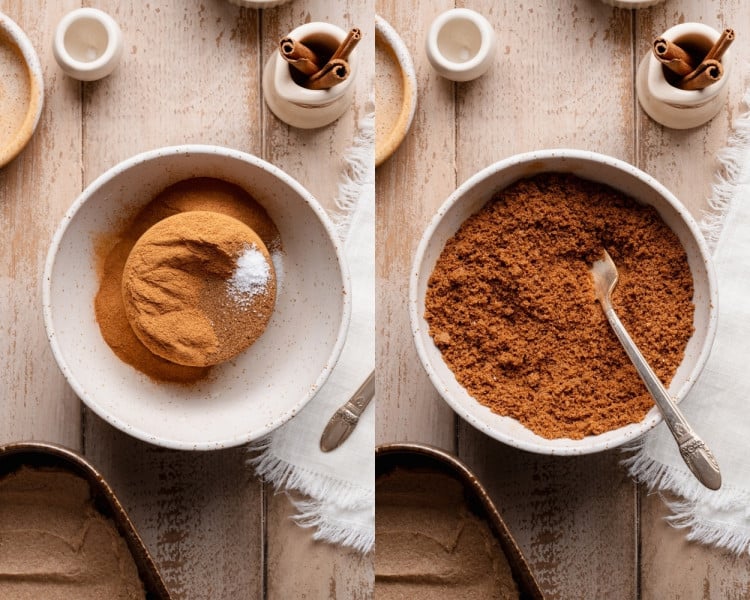
- Make the Filling: In a small bowl, mix together the brown sugar, cinnamon, and salt until combined. Set aside.1 cup dark brown sugar, 3 Tbsp. ground cinnamon, 1/4 tsp. kosher salt
- Roll + Fill the Dough: Once risen, punch down the dough and transfer it to a lightly floured surface. Roll into a rectangle about 18 inches long x 12 inches wide. Spread the softened butter all over the dough, getting all the way to the edges.
- Add Filling: Then add the cinnamon filling evenly over the dough, leaving a small border around the edges and I like to use my fingers to kind of rub it into the butter.1/2 cup unsalted butter
- Roll: Starting from the long side, roll the dough up tightly into a log. Trim the ends if desired, then cut into 12 even rolls. You can use floss or a sharp knife to make ~ 1 ½- 2 inch cuts) Arrange the rolls evenly over the caramel sauce in the prepared pan.
- Bake: Overnight Option: Cover the pan tightly with plastic wrap and refrigerate overnight (8-12 hours). The next morning: Remove the rolls from the fridge, let them sit at room temperature for 45-60 minutes, until puffy. Then preheat oven to 350°F. Same-Day Option (No Overnight): Cover the pan and let the rolls rise in a warm place for 45-60 minutes, until visibly puffy. Preheat the oven to 350°F while they rise.
- Cream Pour (Extra Gooey): Just before baking, slowly pour some (or all) of the slightly warmed heavy cream over the rolls.1/4 cup heavy cream (optional to pour over rolls to make them more gooey)
- Bake: Bake at 350°F for ~30-40 minutes, until golden brown and cooked through. If the tops are browning too quickly, loosely tent with foil. (Check them around the 15-minute mark to check). PS: Fully baked cinnamon rolls will have an internal temp of 190°F-200°F measured from the center of the roll.
- Make the Frosting: While the rolls bake, beat together the cream cheese and butter until smooth and creamy. Add powdered sugar, vanilla bean paste, and a pinch of salt (if needed). Beat until light, fluffy, and spreadable.8 oz. full-fat cream cheese, 1/4 cup salted butter, 2 ½ cups powdered sugar, 1/2 Tbsp. vanilla bean paste, Add a pinch of salt if you used unsalted butter
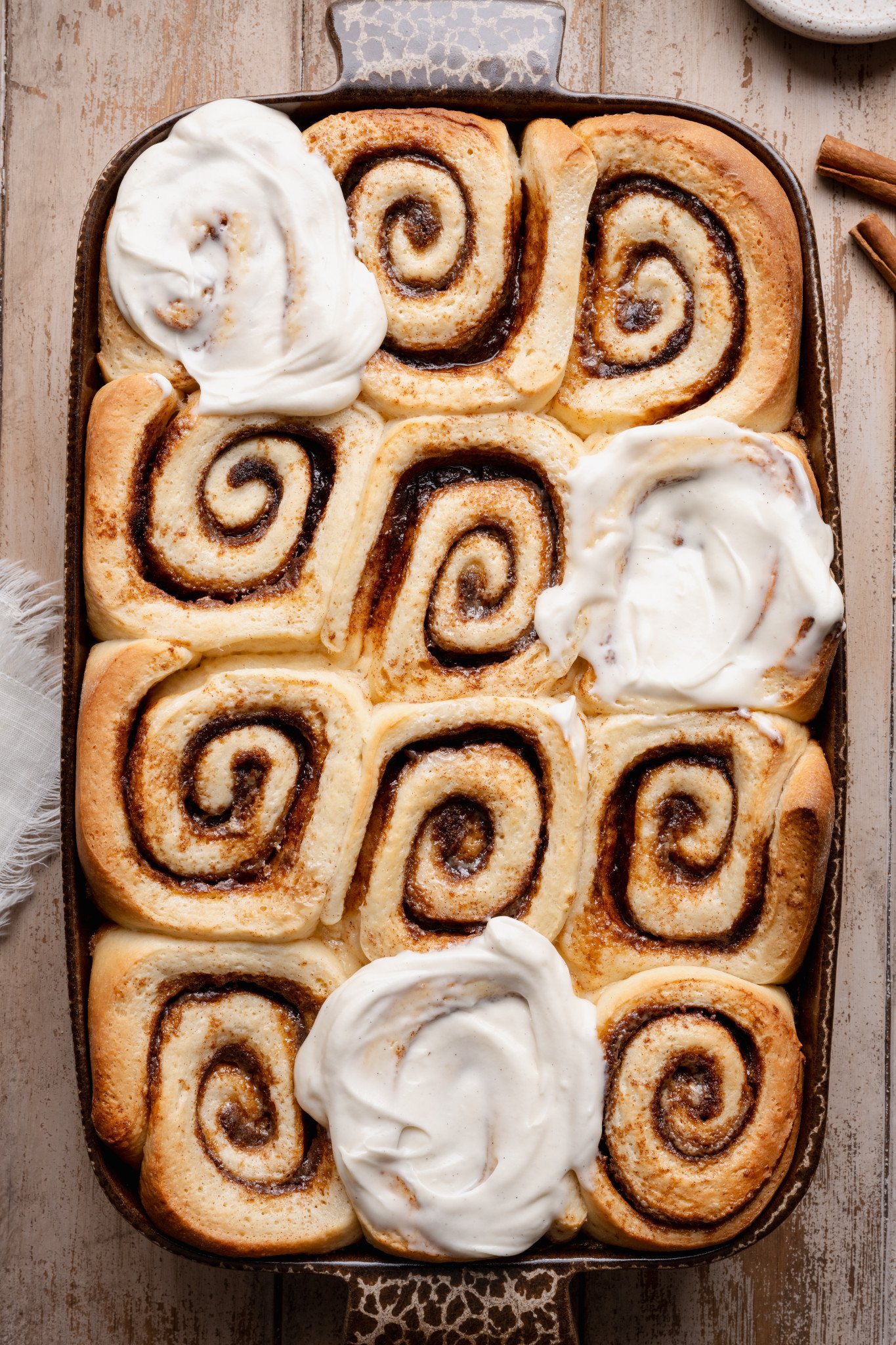
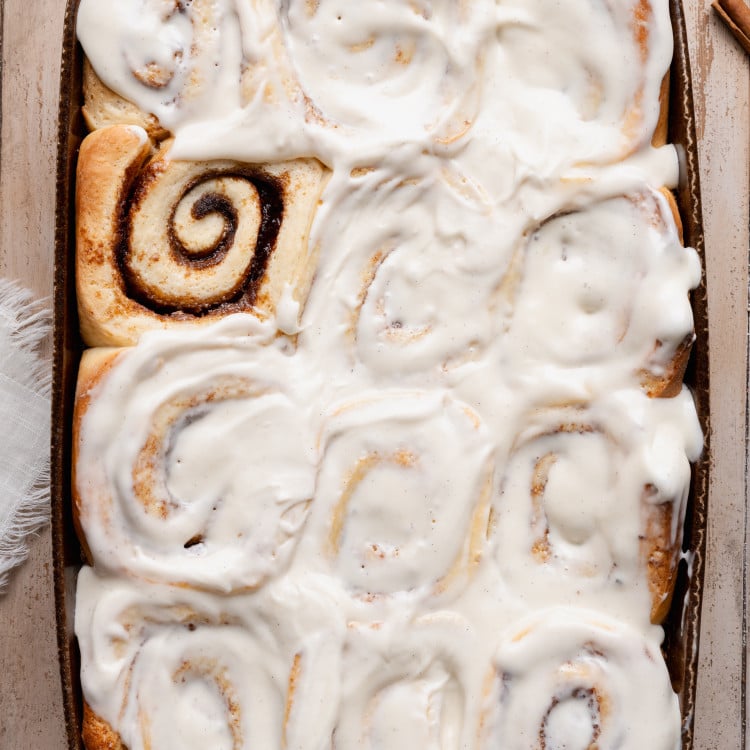
- Frost + Serve: Let the rolls cool for ~10 minutes, then spread generously with frosting while warm so it slightly melts into the rolls. Serve immediately because you’ve waited all this time and deserve it! 🙂
Notes
- Substitute Instant Yeast: If using instant yeast (instead of active dry yeast), you can skip the blooming until foamy and activated in Step 1. Instead, mix the yeast with the flour, sugar, and salt before adding that to the stand mixer with the warm whole milk, eggs, and melted butter.
- Storage:
- Room temperature: Store frosted or unfrosted cinnamon rolls in an airtight container at room temperature for up to 2 days. Re-warm in the microwave until soft and gooey again, ~15-45 seconds. (The cream cheese frosting has sugar, which acts as a preservative and prevents the frosting from spoiling as quickly, which is why it can be kept at room temperature.)
- Refrigerator: Store the frosted or unfrosted rolls tightly covered or in an airtight container in the fridge for up to 5 days. Re-warm in the microwave.
- Freezer: To freeze the baked cinnamon rolls, allow them to cool completely, tightly cover, and then freeze for up to 3 months. Thaw overnight in the fridge, then rewarm and enjoy.
Nutrition Information
Nutritional information is provided as a courtesy and is automatically calculated. It should only be construed as an estimate rather than a guarantee. Ingredients can vary and Kroll’s Korner can’t make any guarantees to the accuracy of this information.
📸 Photography by Creating Kaitlin


These cinnamon rolls are fluffy goodness! 😍 So easy to make and the directions are incredibly easy to follow. This is my third time making them, and after searching for the perfect cinnamon roll recipe, this is THE ONE! They will definitely be my go-to for the holidays, gift giving, or just when I feel like indulging myself in a little cinnamon roll goodness. I love the caramel sauce on the bottom. It’s not too sweet. It’s perfect and I like adding the heavy cream as well. Absolutely delicious!
Thank you for sharing and helping me make wonderful recipes for my family
Wow this just made my day! So happy you enjoyed my recipe. I worked hard to make them really delish so I’m happy you’re enjoying them. Thank you!!🥰
I was very excited to try this new recipe. I would possibly use the recipe for the cinnamon rolls again, but the gooey caramel sauce in the bottom of the pan was too much. All of my family said that the sauce on the bottom was too sweet and overwhelming. If you want the gooey sauce, maybe do half or 1/3 of the recipe, but the full recipe was too much. The rolls were swimming in the sauce.
Hi Jen! Thank you for making them rolls but so sorry about the caramel sauce. When the rolls first come out of the oven, they are very bubbly and saucey, but as the rolls cool a bit, the sauce should almost set up a bit. But I can see how it might be too much for some people, it’s a pretty decadent treat. So sorry to hear, I will leave a note in the recipe so other readers who might share your same opinion have a heads up. Once again I really appreciate you making the recipe and glad the cinnamon roll itself was still yummy 🙂
The rolls themselves are yummy, but I would not recommend the caramel sauce. My rolls were swimming in the sauce and came out very soggy. We managed to salvage most of the outside rolls to eat pieces off, but the middle was complete mush.
Hi! oh no, the caramel sauce shouldn’t have effected them being mushy. Perhaps they just needed a little longer to bake? What type of pan did you bake them in? that can also make a difference.
Baked up beautifully. Ooey, gooey, cinny roll perfection!! The bread flour gives the dough an especially nice chewy texture. Can I rate this 10 out of 5??
Sooo pretty Lauren! Thank you! 🙂