Red Wine Braised Short Ribs

This post may contain affiliate links. Please read our disclosure policy.
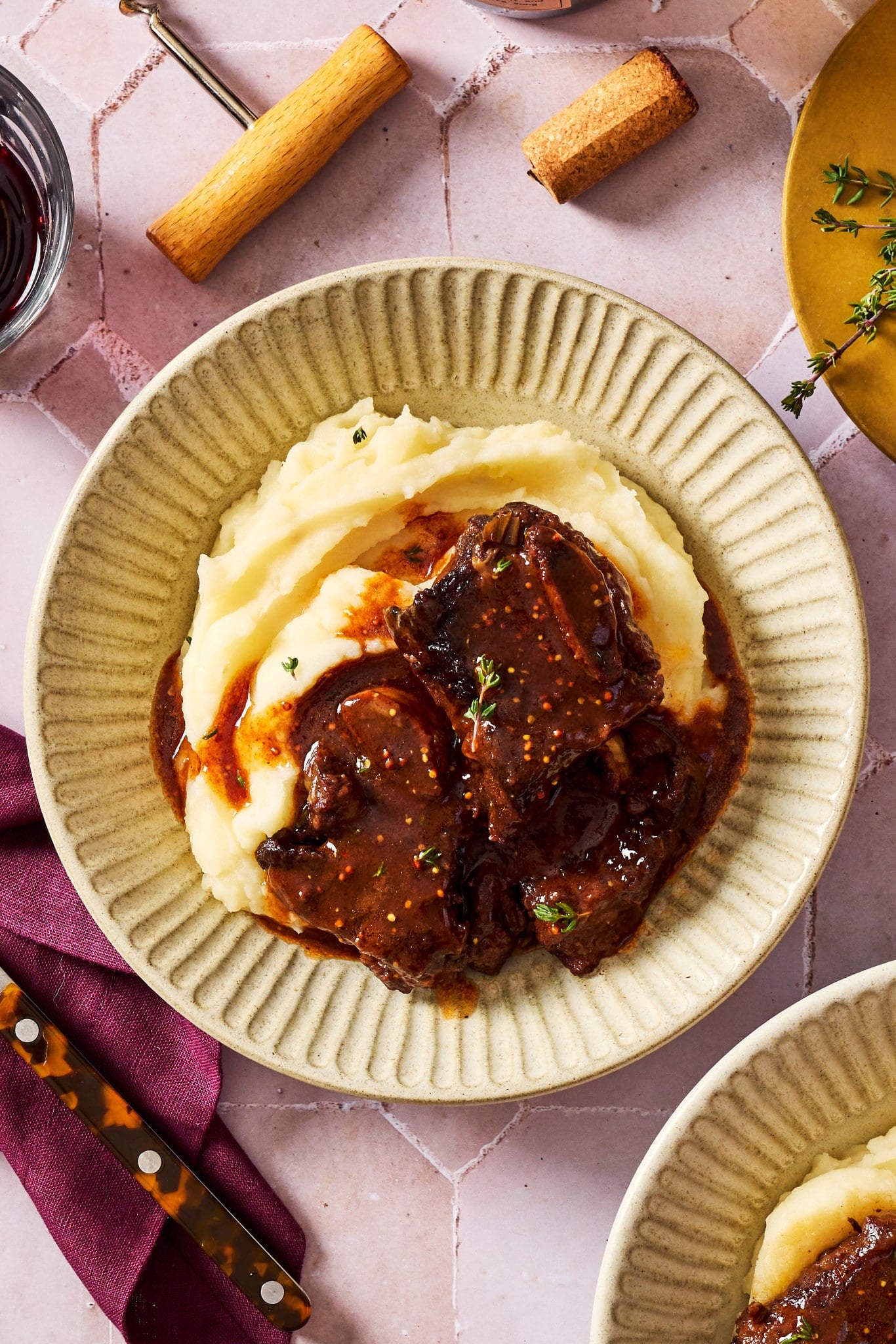
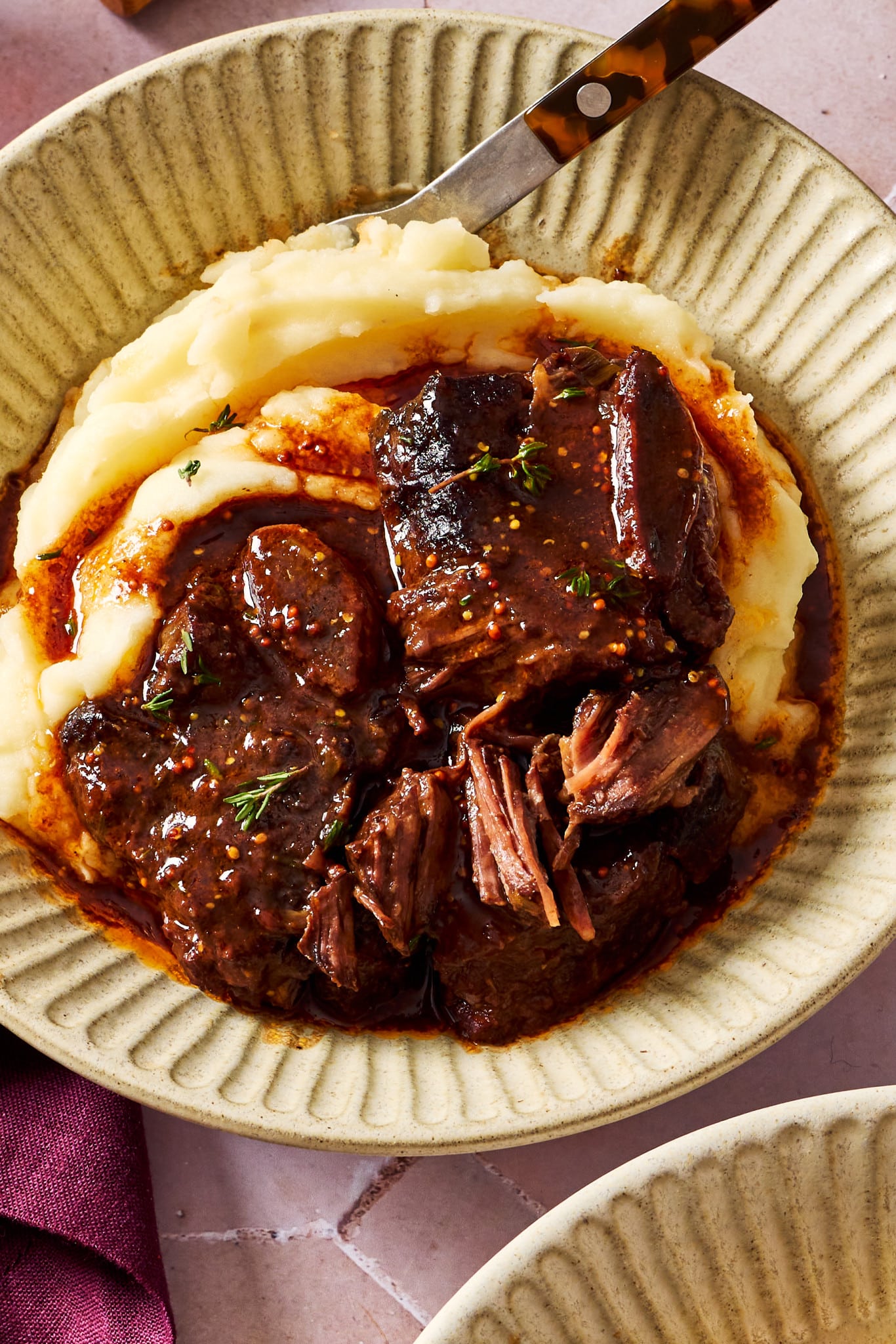
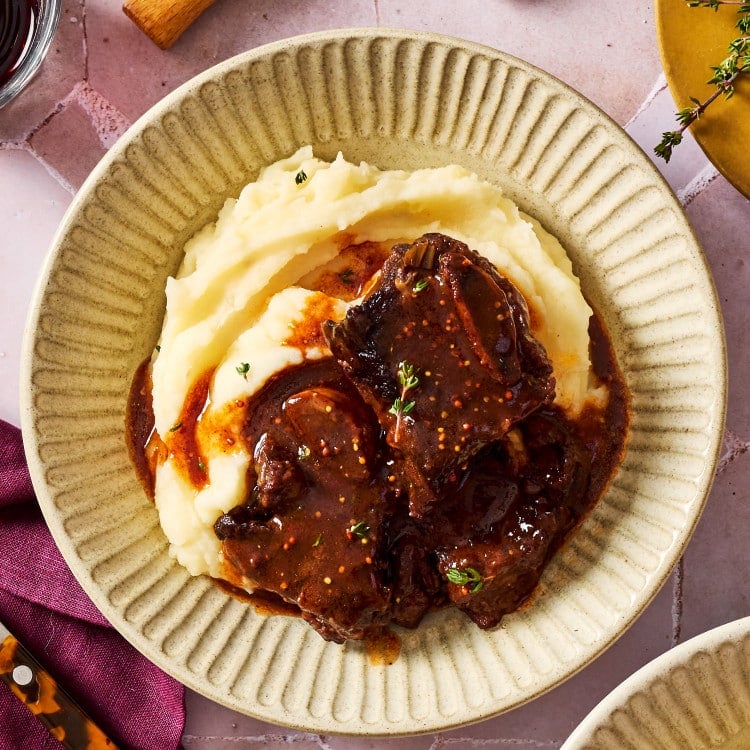
Some dinners are worth the extra time, and these Red Wine Braised Short Ribs are exactly that. Bone-in short ribs are deeply seared, then slowly braised for hours in a rich, concentrated red wine sauce until the meat is fall-apart tender and the sauce is glossy, savory, and ridiculously flavorful.
This is a true weekend-worthy meal. The kind you start in the afternoon when you have nowhere else to be and want dinner to feel a little extra special. Serve those melt-in-your-mouth short ribs over creamy mashed potatoes, spoon that rich red wine sauce over the top, and pour yourself a glass from the bottle you opened for the recipe. Trust me, you earned it!
For more beef recipes, try my Steak Alfredo, Slow Cooker Mongolian Beef, Slow Cooker Beef Ramen, Honey Garlic Black Pepper Ground Beef Bowls, Sheet Pan Flank Steak Fajitas, Grilled Carne Asada, Slow Cooker Beef Barbacoa, or Slow Cooker Birria.
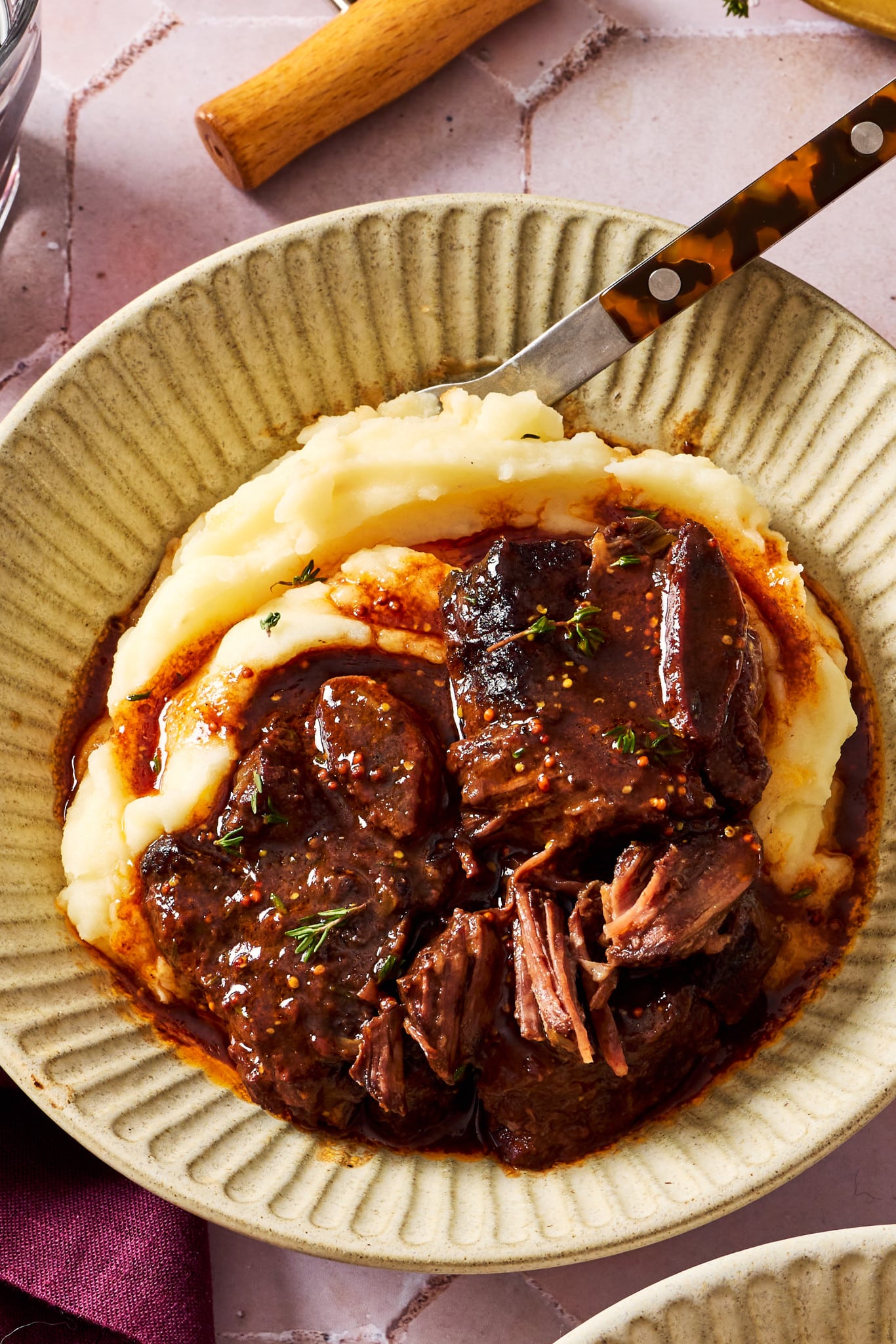

 Table Talk with Tawnie

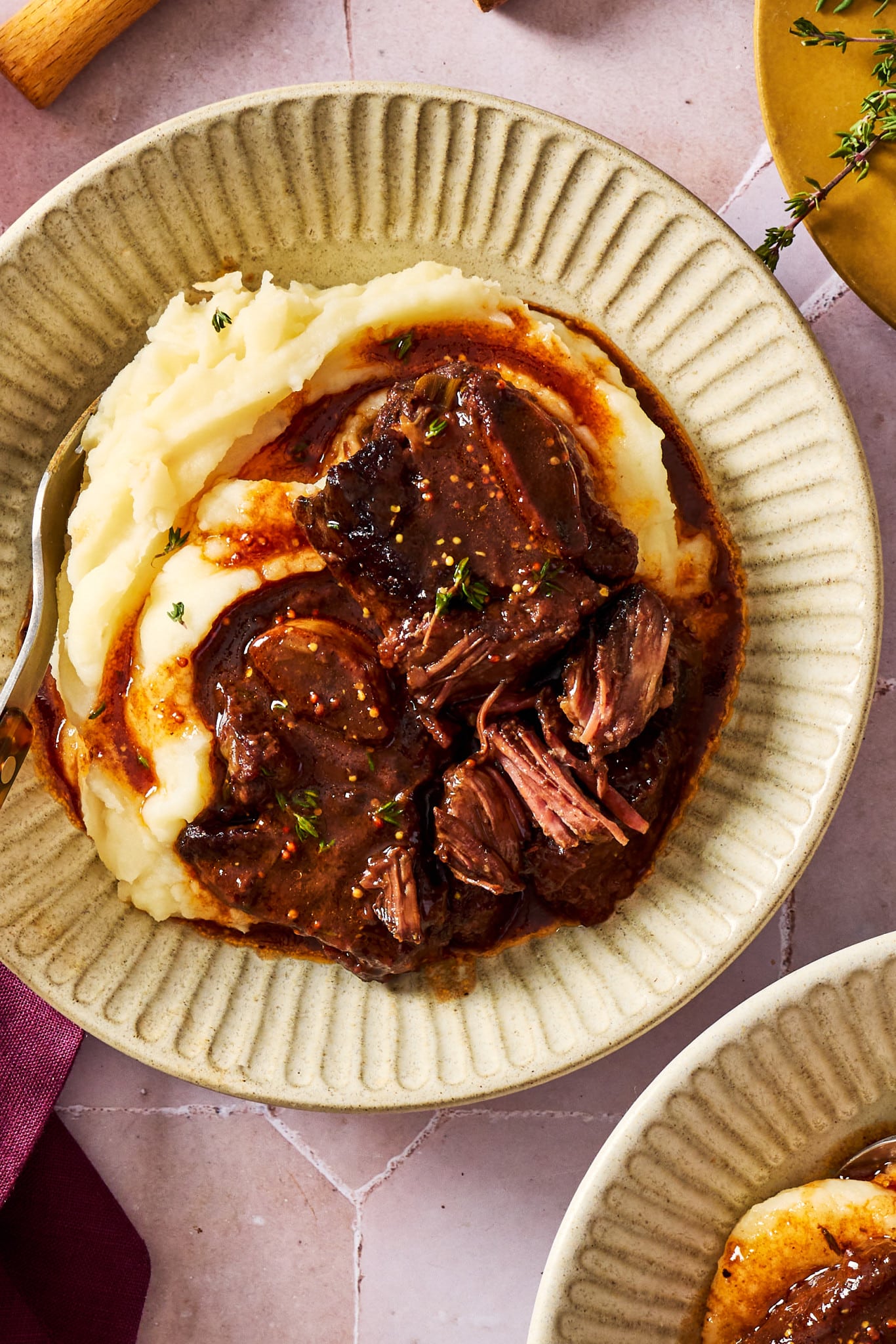
WEEKEND WORTHY! Not only will these short ribs make your house smell amazing but they’re the most flavorful, tender short ribs I think you’ll ever have. When you have a little more protected time on the weekend for a cooking project, add these short ribs to your menu. I am so excited for you to try them
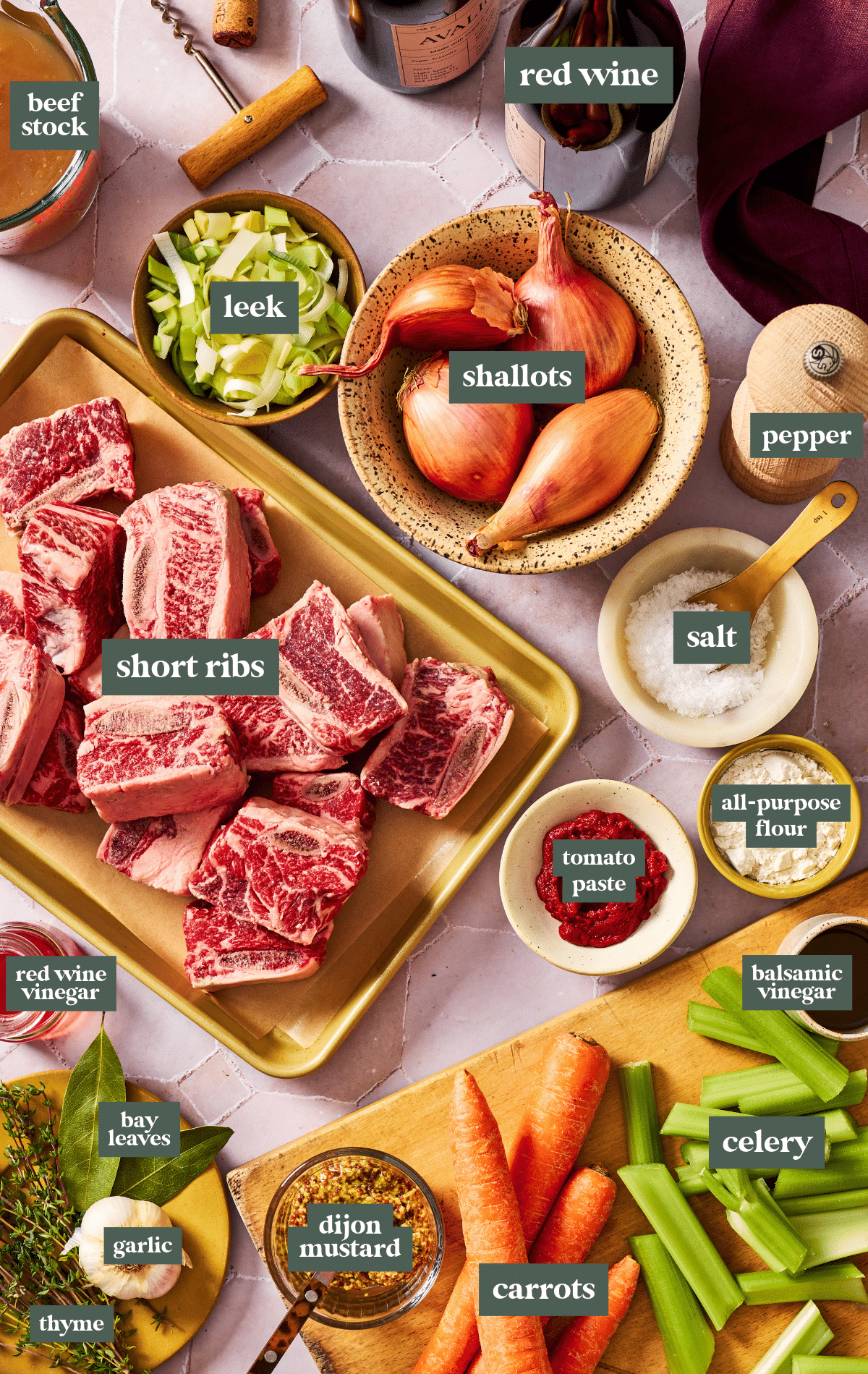
- Short ribs: Look for thick, meaty, English-cut bone-in short ribs rather than thin flanken-style ribs.
- Wine: Use a dry red wine you enjoy drinking. Cabernet Sauvignon, Merlot, or Pinot Noir all work well. Avoid very sweet wines or anything labeled “cooking wine.”
- Beef stock: If you’re using a good-quality homemade beef stock that’s naturally rich in gelatin, you can skip the powdered gelatin. When using boxed beef broth or stock, adding a small amount of gelatin gives the finished sauce more body and that silky, restaurant-style consistency.
- Tomato paste: Adds concentrated tomato flavor, richness, and a little acidity to the braising liquid. Cooking it until it darkens helps deepen the flavor and gives the sauce even more complexity.
- Veggies: Carrots, celery, and leek create a flavorful base for the braising liquid, adding subtle sweetness and savory depth as they slowly cook alongside the short ribs.
Step by Step Directions
(For the full recipe, scroll down to the recipe card below)

Prepare the short ribs
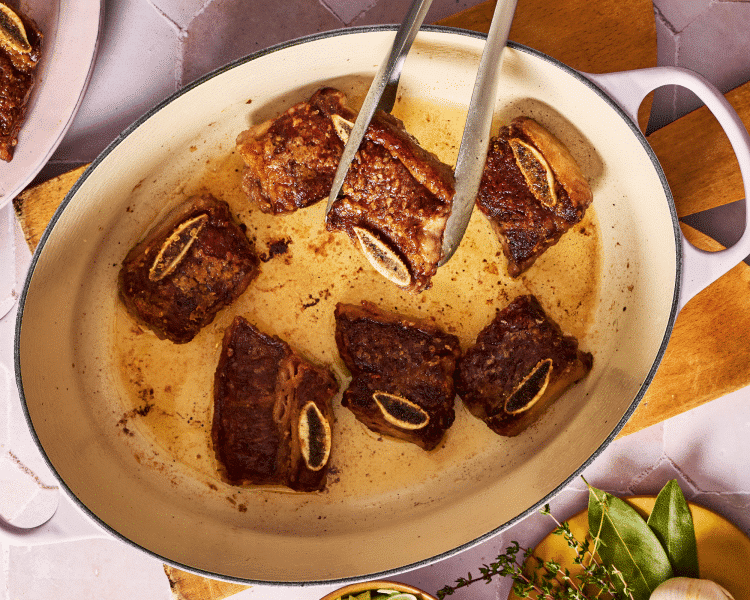
Pat the short ribs dry, season, and lightly dredge in flour. Sear in oil in batches for a few minutes per side, until deeply browned and caramelized, then transfer to a plate.
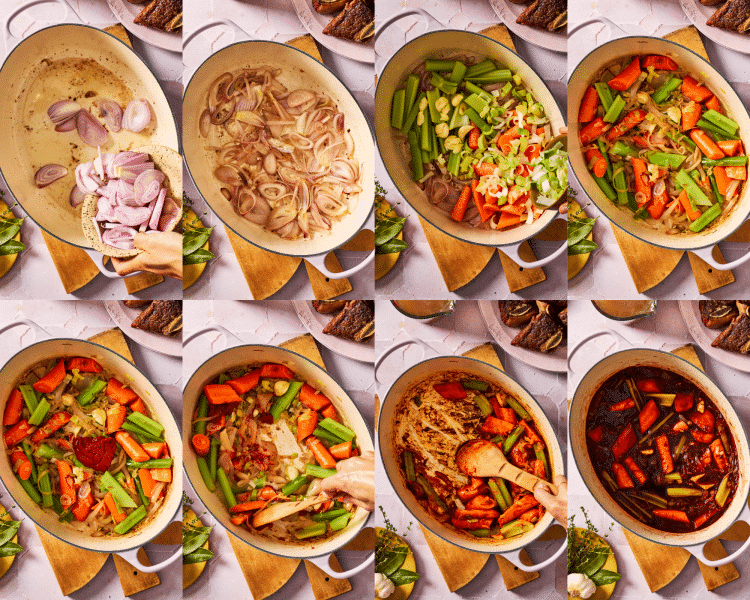
Prepare the vegetables
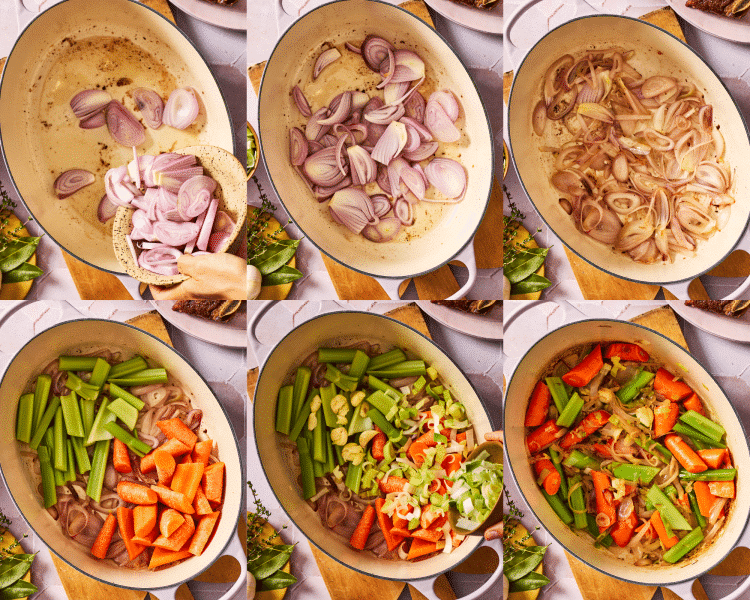
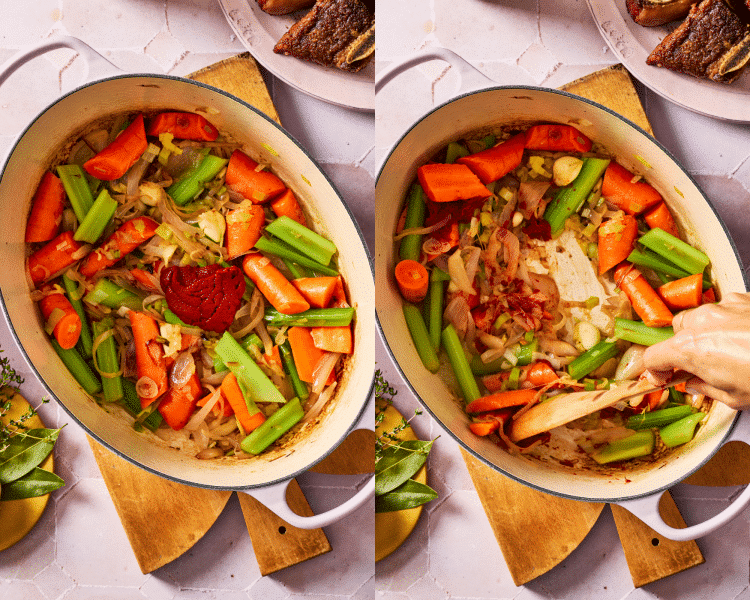
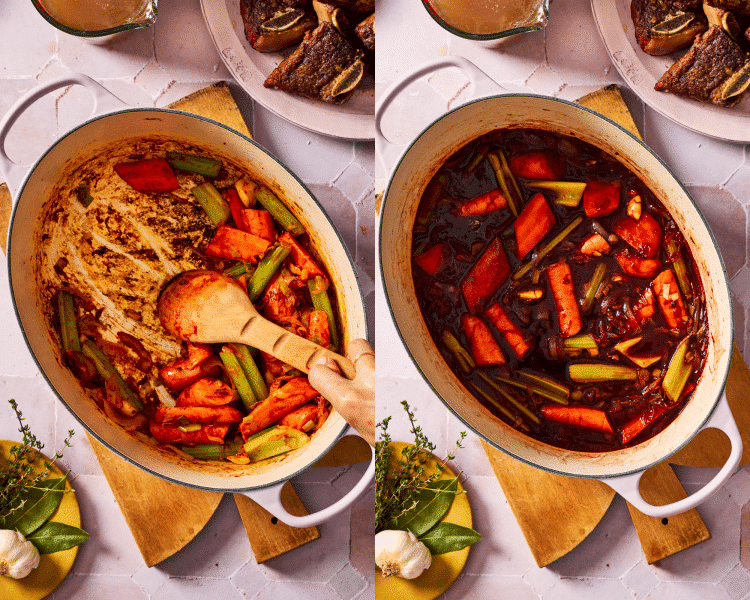
Pour off excess fat, leaving about a tablespoon in the pot. Sauté the veggies and garlic until softened, scraping up the browned bits. Stir in the tomato paste and cook until darkened, then add the reduced wine and simmer for a couple of minutes, scraping the bottom of the pot to release all the flavor.
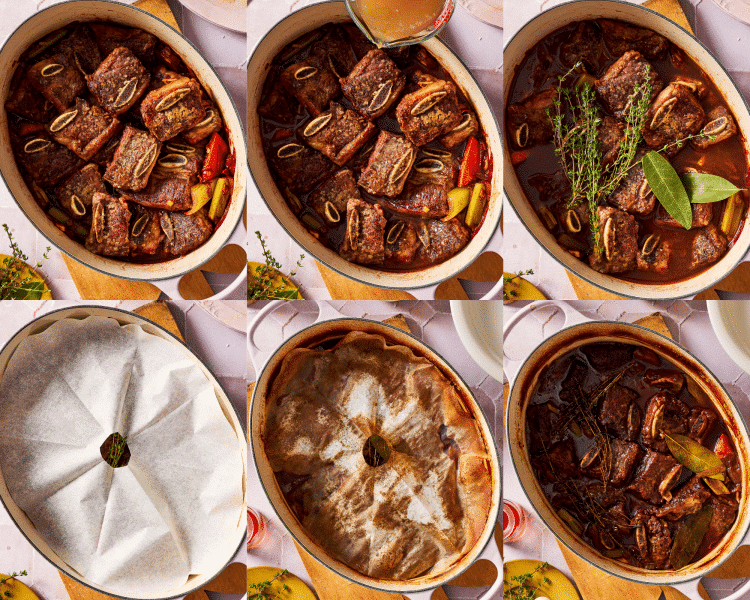
Assemble and cook
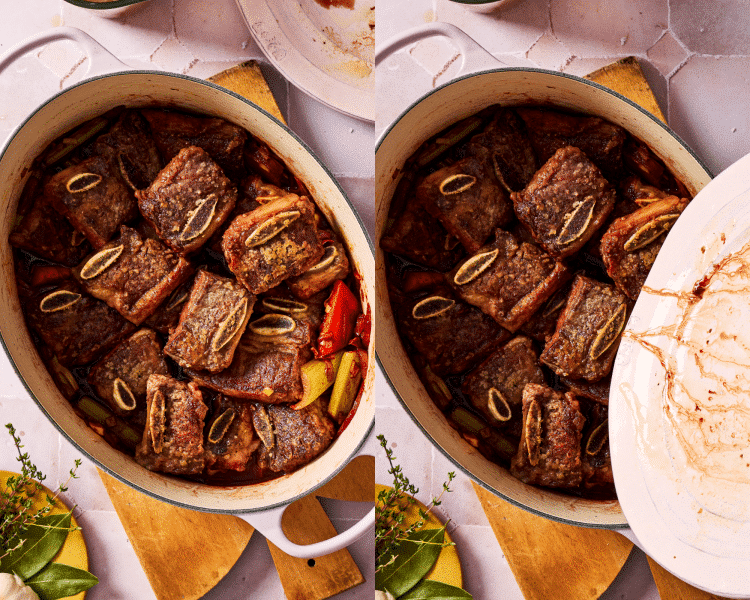
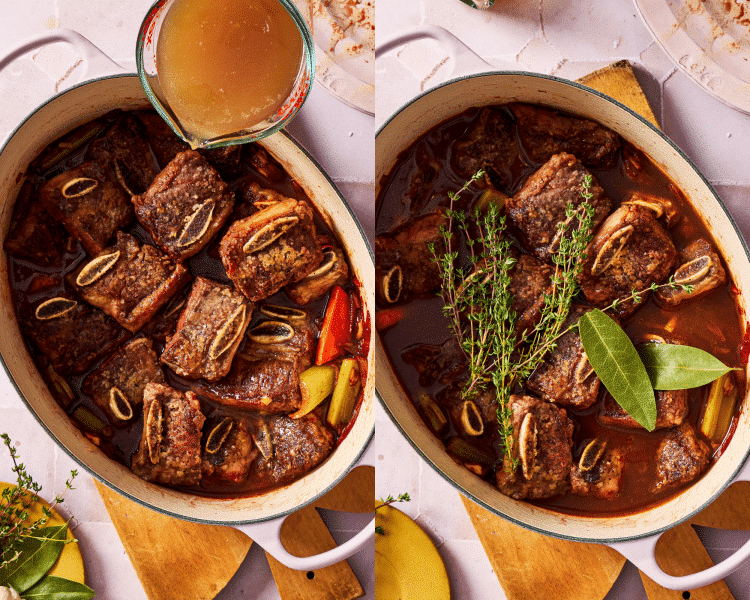
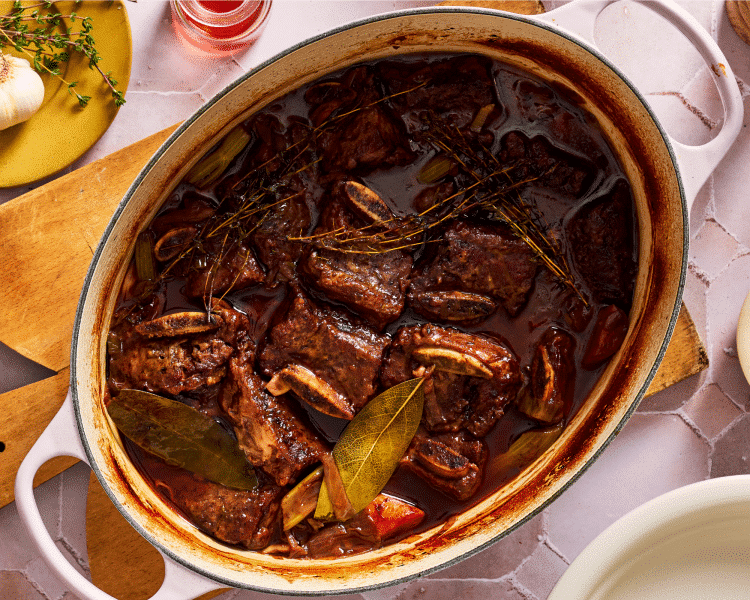
Return the short ribs to the pot and add enough beef stock to come about 3/4 of the way up the sides. Add the thyme and bay leaves, bring to a gentle simmer, then cover with a cartouche and lid. Braise for 4 hours, or until fork-tender. Let the ribs rest in the braising liquid for 30–45 minutes, then transfer to a plate.
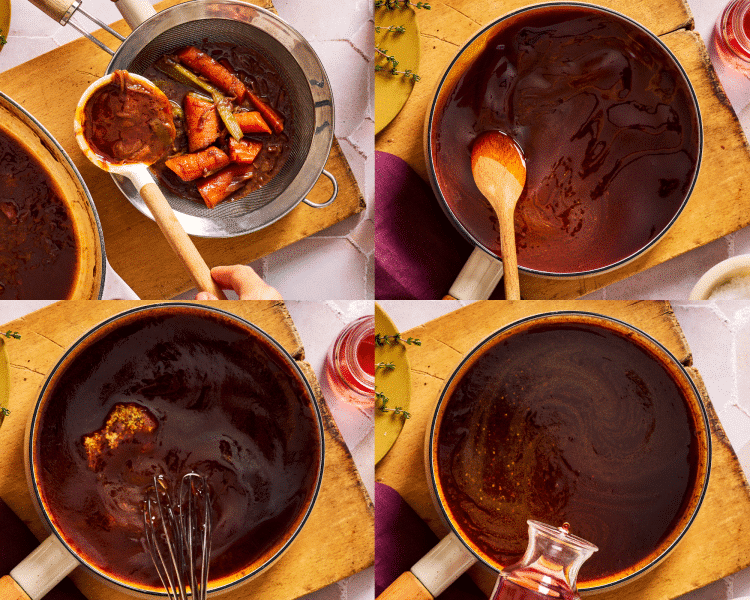
Reduce the sauce
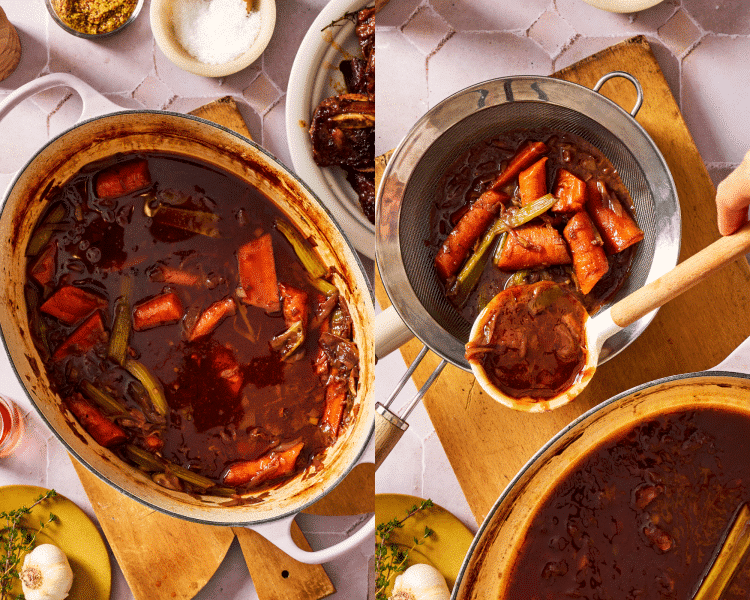
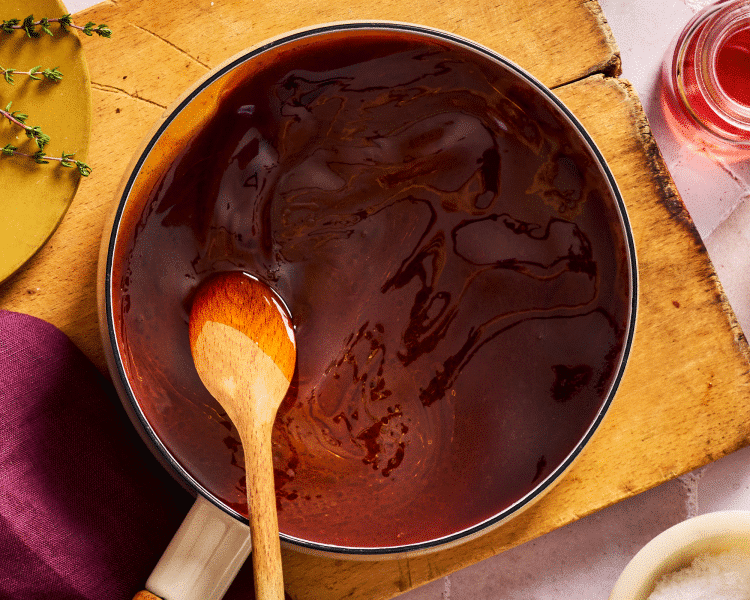
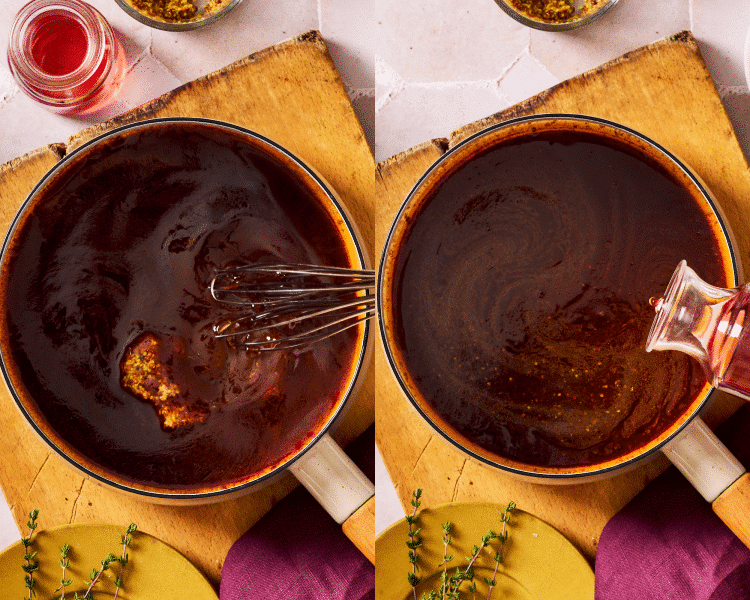
Strain the liquid into a saucepan, pressing the vegetables to release their juices. Simmer the liquid uncovered until it’s reduced and glossy. Whisk in the mustard, then gradually add the vinegar.
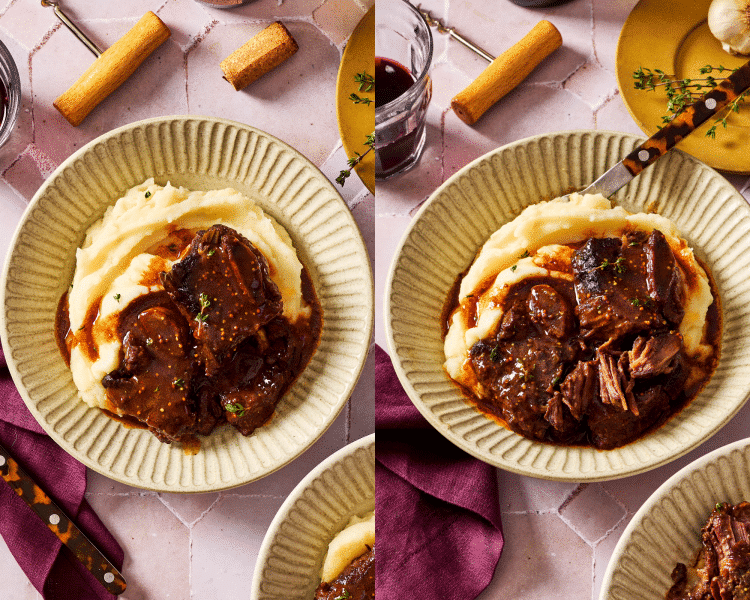
Serve & enjoy!
Serve the short ribs over creamy mashed potatoes, polenta, or your desired side. Spoon the sauce generously over and around the ribs, and ENJOY!
Expert Tips
- Get a good sear: Getting a deep, golden-brown crust on the short ribs really helps to enhance the flavor of this recipe. Work in batches so you don’t overcrowd the pot.
- Use a wine you’d actually drink: Since you’re using a generous amount of red wine, choose one you enjoy! I like to use a dry Cabernet Sauvignon, Merlot, or Pinot Noir.
- Reduce the wine first: It may seem like an extra step, but reducing the wine concentrates its flavor and mellows the sharper alcohol notes, giving the finished sauce a much richer flavor.
- Don’t rush the braise: Short ribs can still feel surprisingly tough before the collagen has fully broken down. If they’re not fork-tender after 4 hours, continue braising and check every 20–30 minutes.
- Let the ribs rest before handling: The meat will be incredibly tender after braising, so giving it 30–45 minutes in the cooking liquid makes it much easier to transfer without falling apart.
- Taste the sauce at the end: The final splash of vinegar is important! Add it gradually until the sauce tastes bright and balanced rather than heavy.
Make Ahead
Short ribs are even better the next day! Prepare the recipe through the braising step, then allow the short ribs to cool in their braising liquid. Cover and refrigerate overnight.
The next day, remove and discard the layer of solidified fat from the top. Gently reheat the short ribs in the braising liquid, then remove the ribs and proceed with straining, reducing and finishing the sauce.
Variations / Substitutions
- Gelatin: If you’re using a good-quality homemade beef stock that’s naturally rich in gelatin, you can skip the powdered gelatin. When using boxed beef broth or stock, adding a small amount of gelatin gives the finished sauce more body and that silky, restaurant-style consistency.
- Skip the leek: If you don’t have a leek on hand, you can simply leave it out. The shallots, carrots, celery, and garlic will still create a flavorful base.
- Change up the serving: Mashed potatoes are classic, but the short ribs are also delicious over creamy polenta, mashed cauliflower, or buttered egg noodles.
- Add mushrooms: For even more savory flavor, sauté sliced mushrooms separately and serve them alongside the finished short ribs.
Storage / Freezing
- Store: Store the short ribs and sauce in an airtight container in the refrigerator for up to 4 days.
- Freeze: Let cool completely, then store the meat and sauce together in a freezer-safe container for up to 3 months. Thaw overnight in the refrigerator before reheating.
- Reheat: Gently reheat the short ribs and sauce in a covered Dutch oven or saucepan over low heat until warmed through. If the sauce has thickened too much in the refrigerator, add a splash of beef stock or water to loosen it.
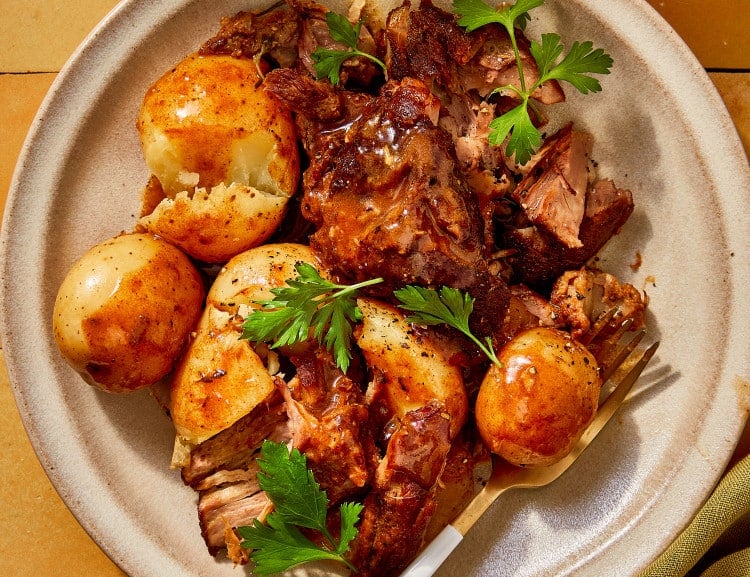
Weekend Worthy Series
Check out my new series featuring weekend worthy recipes that feel a little more elevated and special, without requiring a ton of extra effort. Think cozy dinners, impressive mains, and dishes that are worth slowing down for on the weekend.
FAQs
Use a dry red wine that you enjoy drinking, such as Cabernet Sauvignon, Merlot, Pinot Noir, or a dry red blend. Just make sure to skip the cooking wine!
If your short ribs aren’t fork-tender after 4 hours, they likely need more time. Short ribs become tender when the connective tissue has had enough time to break down, so continue braising until a fork slides easily into the meat with very little resistance.
If you’re using a good-quality homemade beef stock that’s naturally rich in gelatin, you can skip the powdered gelatin. When using boxed beef broth or stock, adding a small amount of gelatin gives the finished sauce more body and that silky, restaurant-style consistency.
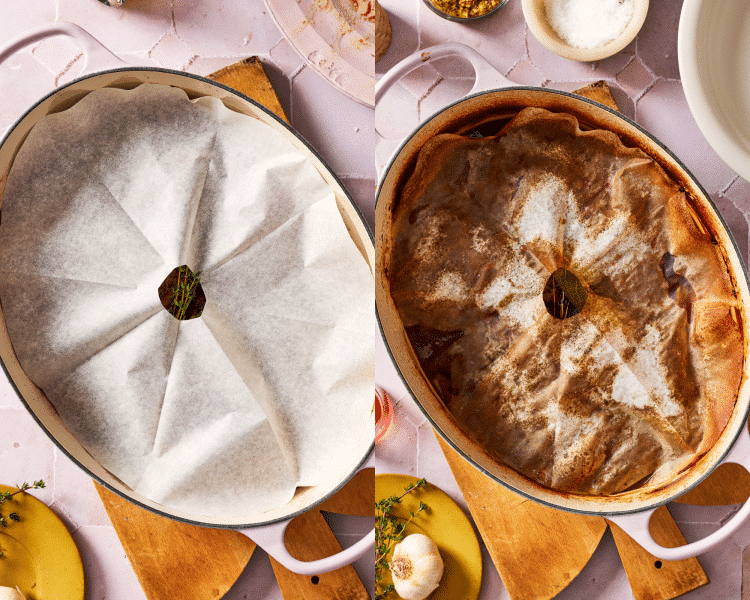
A cartouche is a round piece of parchment paper placed directly on the surface of the braising liquid before covering the pot with a lid. It helps regulate evaporation, keeps the short ribs moist, and encourages even, gentle cooking. It’s a great technique for braising, but if you don’t have one, you can skip it and simply use a tight-fitting lid. I used this video to make mine!
Yes! In fact, they’re even better the next day. Prepare the recipe through the braising step, cool, and refrigerate the short ribs and sauce overnight. The flavors have more time to develop, and any excess fat will solidify on top, making it easy to remove before reheating.
shop this post
 Buy Now →
 Buy Now →
More Dinner Recipes You’ll Love


Before You Begin! If you make this, please leave a review and rating letting us know how you liked this recipe! This helps our business thrive & continue providing free recipes.
Red Wine Braised Short Ribs
Ingredients
- 6-8 short ribs (bone-in (~4-5 lbs))
- 1/4 cup all-purpose flour (just enough for dredging)
- Kosher Salt and black pepper
- Avocado oil or vegetable oil
- 2 bottles red wine (yes, 2 bottles! hehe (something you’d drink, not cooking wine) I usually grab a 1.5L of wine from Costco and use that.)
- 4 large shallots (peeled and sliced)
- 3-4 large carrots (cut into large pieces)
- 4 celery ribs (cut into large pieces)
- 1 leek (chopped (optional))
- 6 cloves garlic (crushed)
- 3 Tbsp. tomato paste
- 2-4 cups beef stock
- 1/2 packet unflavored gelatin (about 1¼ tsp., optional*)
- 6-8 sprigs fresh thyme
- 2 bay leaves
- 1/2 Tbsp. whole grain mustard
- 1 Tbsp. balsamic vinegar or red wine vinegar (to finish)
- Salt and pepper (to taste)

Last step! If you make this, please leave a review and rating letting us know how you liked this recipe! This helps our business thrive & continue providing free recipes.
Instructions
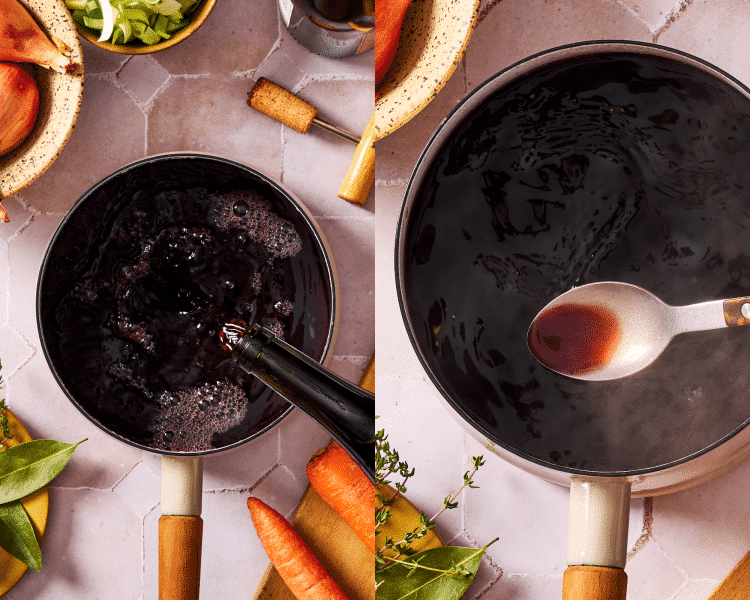
- Reduce the red wine: Pour the red wine into a medium saucepan and bring to a gentle boil over medium-high heat. Reduce the heat as needed to maintain a steady simmer and cook for at least 30-50 minutes Start Timer, or until the wine has reduced by more than half. It should look slightly syrupy and taste more concentrated and less sharp. (will reduce to ~ 1½ cups) Remove from the heat and set aside.2 bottles red wine

- Prep and season the short ribs: Preheat the oven to 300°F. Pat the short ribs very dry with paper towels. This will help you get a really good sear. Season generously on all sides with salt and pepper, then lightly dredge the ribs in seasoned flour, shaking off any excess.6-8 short ribs, Kosher Salt and black pepper, 1/4 cup all-purpose flour
- Sear the short ribs: Heat the oil in a large Dutch oven or heavy oven-safe pot over medium-high heat. Working in batches so you don't overcrowd the pot, sear the short ribs for about 3-4 minutes per side Start Timer, turning until they're deeply browned all over. Don't rush this step! That deep caramelization builds a ton of flavor for the braising liquid. Transfer the browned short ribs to a plate and repeat with the remaining short ribs.Avocado oil or vegetable oil
- Prepare the stock: If using the gelatin, sprinkle it over the cold beef stock and let it sit for about 5 minutes to bloom; set aside. Start Timer1/2 packet unflavored gelatin, 2-4 cups beef stock
- Sauté the vegetables: Carefully pour off the excess fat, leaving about 1 tablespoon in the pot. Reduce the heat to medium and add the shallots. Cook for 3-4 minutes Start Timer, stirring occasionally, until softened and beginning to caramelize. Add the carrots, celery, leek, and garlic and cook for another 6-8 minutes Start Timer, stirring occasionally, until the vegetables are softened and nicely golden. I like to add some salt and pepper during this step, too. Scrape up the flavorful browned bits from the bottom of the pot as the vegetables release their moisture.4 large shallots, 3-4 large carrots, 4 celery ribs, 1 leek, 6 cloves garlic
- Caramelize the tomato paste: Add the tomato paste and cook for 2-3 minutes Start Timer, stirring frequently, until it turns a deeper brick-red color and begins to stick slightly to the bottom of the pot. Cooking the tomato paste rather than simply stirring it in helps deepen its flavor and removes the raw tomato taste.3 Tbsp. tomato paste
- Deglaze with the reduced wine: Slowly pour the reduced red wine into the pot. Use a wooden spoon to scrape up all of the browned bits from the bottom. There's so much flavor hiding down there! Bring the mixture to a simmer and cook for 2-3 minutes. Start Timer
- Assemble the braise: Return the short ribs and any accumulated juices to the pot, arranging them in a single layer if possible.
- Add beef stock: Pour in enough beef stock to come about 3/4 of the way up the sides of the ribs; they don't need to be completely submerged so you probably won't need a full 4 cups. Add the bay leaves and thyme just right on top.6-8 sprigs fresh thyme, 2 bay leaves
- Braise low and slow: Bring the liquid just to a gentle simmer on the stovetop. Place a cartouche (a round piece of parchment paper…here is how I make mine) directly over the surface, then cover the pot tightly with the lid. Transfer to the oven and braise for 4 hours Start Timer, or until the short ribs are extremely tender and a fork slides easily into the meat with very little resistance. If they're still tough, they simply need more time.
- Let the ribs rest: Remove the pot from the oven and let the short ribs rest (with the lid still on) in the braising liquid for 30-45 minutes Start Timer. This makes the very tender ribs easier to handle without falling apart. Carefully transfer them to a plate and loosely cover to keep warm.
- Strain the braising liquid: Pour the liquid through a fine-mesh strainer into a clean saucepan, gently pressing on the vegetables to extract their liquid. Discard the vegetables and herbs. Skim excess fat from the surface, leaving a little behind for richness.
- Reduce the sauce: Bring the strained braising liquid to a steady simmer over medium to medium-high heat. Cook uncovered for approximately 10-20 minutes Start Timer, depending on how much liquid you have, until noticeably reduced and glossy. You're looking for a sauce that lightly coats the back of a spoon rather than a thin, broth-like consistency. If you still see a layer of fat or greasy liquid at the top, spoon it out.
- Finish the sauce: Reduce the heat to low and whisk in the mustard. Add the vinegar a little at a time, tasting as you go…the acidity should brighten the rich sauce without making it taste vinegary. Taste and season with additional salt and pepper as needed. You can't go wrong with a little more salt for this one!1/2 Tbsp. whole grain mustard, 1 Tbsp. balsamic vinegar or red wine vinegar, Salt and pepper
- Serve: Place the short ribs over creamy mashed potatoes, polenta, or your desired side. Spoon the glossy red wine sauce generously over and around the ribs. Garnish with fresh herbs AND ENJOY! Wow, SO GOOD!
Notes
- Make ahead: Short ribs are even better the next day! Prepare the recipe through the braising step, then allow the short ribs to cool in their braising liquid. Cover and refrigerate overnight.
- The next day, remove and discard the layer of solidified fat from the top. Gently reheat the short ribs in the braising liquid, then remove the ribs and proceed with straining, reducing, and finishing the sauce.
- Gelatin: If you’re using a good-quality homemade beef stock that’s naturally rich in gelatin, you can skip the powdered gelatin. When using boxed beef broth or stock, adding a small amount of gelatin gives the finished sauce more body and that silky, restaurant-style consistency.
- Wine: Use a dry red wine you enjoy drinking. Cabernet Sauvignon, Merlot or Pinot Noir all work well. Avoid very sweet wines or anything labeled “cooking wine.”
- Short ribs: Look for thick, meaty, English-cut bone-in short ribs rather than thin flanken-style ribs.
- Don’t rush the braise: Short ribs can still feel surprisingly tough before the collagen has fully broken down. If they’re not fork-tender after 4 hours, continue braising and check every 20–30 minutes.
- Recipe inspired by: Fallow
Nutrition Information
Nutritional information is provided as a courtesy and is automatically calculated. It should only be construed as an estimate rather than a guarantee. Ingredients can vary and Kroll’s Korner can’t make any guarantees to the accuracy of this information.
📸 Photography by Angelica Oles