
Apple Cider Braised Pork
This Apple Cider Braised Pork is the ultimate cozy fall dinner, with tender, fall-apart pork simmered in a rich apple cider and herb sauce. Add baby potatoes and sweet-tart apples to the pot, and you have an easy one-pot meal that feels hearty, comforting, and special enough for a weekend-worthy meal!
Servings 6 -8 servings
Calories 634kcal
Equipment
Ingredients
Pork
- 4-5 lbs. boneless pork shoulder/Boston butt
- 2 tsp. kosher salt, plus more to taste
- 1 tsp. freshly cracked black pepper
- 1 tsp. smoked paprika
- 1/4 tsp. cayenne pepper, optional
- 2 Tbsp. avocado oil or olive oil
Braising Liquid
- 1 large red onion, cut into thick wedges
- 6 cloves garlic, minced
- 1 Tbsp. fresh ginger, finely grated
- 2 cups fresh apple cider, not apple cider vinegar
- 1½ cups low-sodium chicken broth
- 2 Tbsp. Dijon mustard
- 1 Tbsp. apple cider vinegar
- 1 Tbsp. Worcestershire sauce
- 4 sprigs fresh thyme
- 2 sprigs fresh rosemary
- 2 bay leaves
Finish
- 2 firm apples, cut into thick wedges
- 1½ lb. baby potatoes
- 1 Tbsp. unsalted butter, optional
- Fresh thyme or parsley, for serving

Instructions
- Prep: Preheat the oven to 325°F.
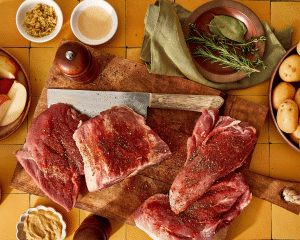
- Season pork: Pat the pork shoulder dry with paper towels and cut into 3-4 large pieces. Season all over with the salt, black pepper, smoked paprika, and cayenne pepper, if using.4-5 lbs. boneless pork shoulder/Boston butt, 2 tsp. kosher salt, 1 tsp. freshly cracked black pepper, 1 tsp. smoked paprika, 1/4 tsp. cayenne pepper
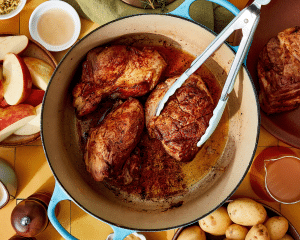
- Sear pork: Heat the oil in a large Dutch oven over medium-high heat. Once hot, add the pork in a single layer, working in batches if necessary to avoid overcrowding. Sear for 4-5 minutes per side, or until deeply golden brown. Transfer the pork to a plate and set aside.2 Tbsp. avocado oil or olive oil
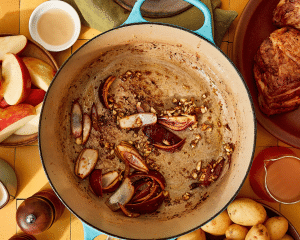
- Aromatics: Reduce the heat to medium. Add half of the red onion and cook for a few minutes, stirring occasionally, until beginning to soften. Add the garlic and ginger and cook for 30-60 seconds, stirring constantly, until fragrant.1 large red onion, 6 cloves garlic, 1 Tbsp. fresh ginger
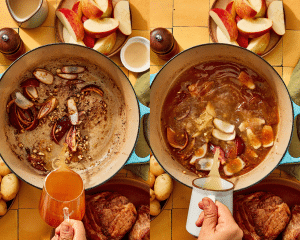
- Build braising liquid: Pour in a splash of the apple cider and use a wooden spoon to scrape up any browned bits from the bottom of the Dutch oven. Add the remaining apple cider, chicken broth, Dijon mustard, apple cider vinegar, and Worcestershire sauce. Whisk to combine.2 cups fresh apple cider, 1½ cups low-sodium chicken broth, 2 Tbsp. Dijon mustard, 1 Tbsp. apple cider vinegar, 1 Tbsp. Worcestershire sauce
- Add pork back in: Return the pork and any accumulated juices to the Dutch oven. Add the thyme, rosemary, and bay leaves. The braising liquid should come about halfway up the sides of the pork. Bring the liquid to a gentle simmer.4 sprigs fresh thyme, 2 sprigs fresh rosemary, 2 bay leaves
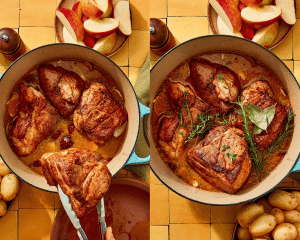
- Make a cartouche (optional): Place a cartouche (a round piece of parchment paper…here is how I make mine) directly over the surface, then cover the pot tightly with the lid.
- Cook: Cover the Dutch oven with a tight-fitting lid and transfer to the oven. Braise for 2 ½-3 hours, flipping the pork pieces about halfway through cooking.
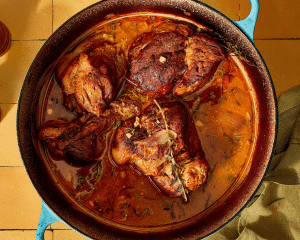
- Add potatoes and apple: Once the pork is beginning to become tender, nestle the baby potatoes, remaining red onion, and apple around the pork, if using. Cover and continue braising for another 45-60 minutes.2 firm apples, 1½ lb. baby potatoes
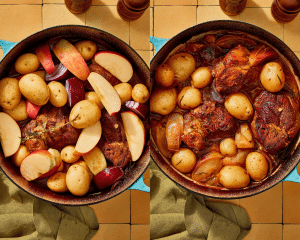
- Check pork: Cook until the pork is very tender and easily pulls apart with a fork, the potatoes are fork-tender, and the apples are softened.
- Transfer: Carefully transfer the pork, potatoes, and apples to a serving platter. Discard the bay leaves. Skim any excess fat from the surface of the braising liquid, if any.
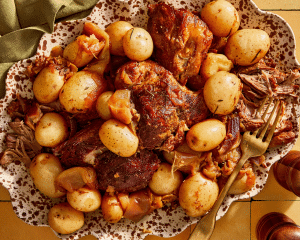
- Reduce braising liquid (optional): Place the Dutch oven over medium-high heat and bring the braising liquid to a simmer. Cook uncovered for 8-12 minutes, stirring occasionally, until reduced and slightly thickened into a rich, glossy sauce.
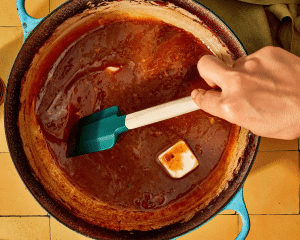
- Taste: Taste and adjust with additional salt and black pepper as needed. If the sauce tastes too sweet, add an additional splash of apple cider vinegar. For an extra-rich, silky sauce, remove from the heat and whisk in 1 Tbsp butter.1 Tbsp. unsalted butter
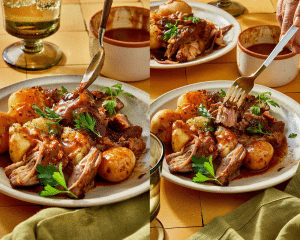
- Serve: Spoon the cider sauce generously over the pork, potatoes, and apples. Garnish with fresh thyme or parsley and serve warm.Fresh thyme or parsley
Notes
- Don’t skip the sear: Take the time to get the pork deeply golden brown on all sides. Those browned bits left in the bottom of the Dutch oven add so much flavor to the finished sauce.
- Use apple cider, not apple cider vinegar: Fresh apple cider gives the braising liquid its subtle sweetness and apple flavor. Apple cider vinegar is used separately in a small amount to add acidity and balance.
- Refrigerate: Let the pork and vegetables cool slightly, then transfer everything to an airtight container with some of the braising sauce. Refrigerate for up to 4 days.
- Reheat: Reheat gently on the stovetop over medium-low heat, adding a splash of chicken broth or water if the sauce has thickened too much. Individual portions can also be reheated in the microwave.
- Purpose of using a cartouche:
- It stops the meat from drying out. Any meat poking above the liquid can dry out and toughen, even with the lid on. The cartouche sits right on the food and keeps the exposed parts moist.
- It recycles moisture. Steam condenses on the parchment and drips right back onto the pork, so the top stays basted the whole time.
- It controls evaporation. The liquid reduces slowly and evenly instead of boiling down too fast, so you don’t end up with a scorched, too-thick sauce.
- It keeps the cooking gentle and even. The parchment traps a thin layer of steam that keeps the temperature steady around the pork.
- It prevents a skin from forming on the surface of the sauce, especially with wine- or stock-based braises like in my red wine braised short ribs.
Nutrition
Serving: 1.5cups | Calories: 634kcal | Carbohydrates: 43g | Protein: 73g | Fat: 18g | Saturated Fat: 5g | Polyunsaturated Fat: 3g | Monounsaturated Fat: 9g | Trans Fat: 0.1g | Cholesterol: 187mg | Sodium: 917mg | Potassium: 1928mg | Fiber: 5g | Sugar: 16g | Vitamin A: 600IU | Vitamin C: 29mg | Calcium: 70mg | Iron: 4mg